Commercial Water Damage in Glendale
A wet business space creates decisions about people, stock and access alongside the building damage. Glendale commercial cleanup organizes those needs around the actual water footprint and a documented sequence of recovery work.
(888) 578-6508Discuss cleanup access for the business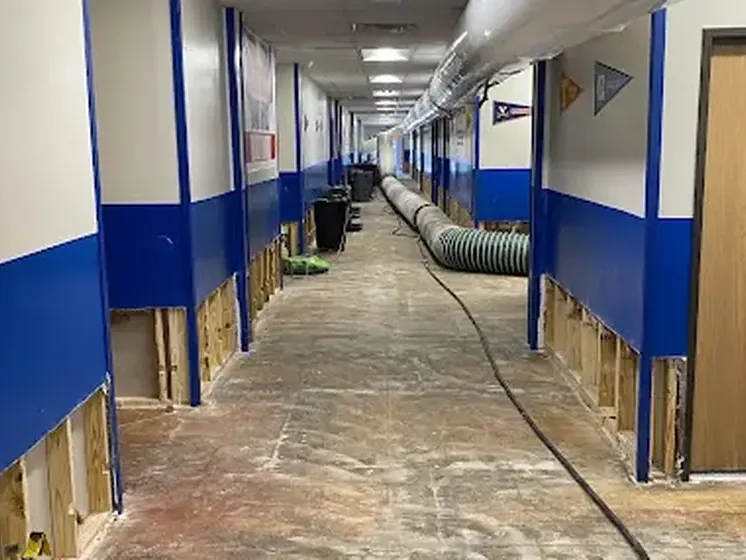
A water loss in a working property involves more than the wet floor. Customers, employees, stored goods and shared passages can all affect access to the damage. The restoration plan needs an authorized property contact, a defined work boundary and a clear record of which spaces remain occupied during recovery.
First steps for commercial water damage in Glendale
Identify the authorizing contact
Establish who controls access and scope decisions. Shared areas and adjoining suites may need additional coordination before equipment placement or material removal can proceed.
Define the work boundary
Separate wet rooms and equipment routes from occupied areas. The layout should account for stock movement, electrical safety and passages needed by people using unaffected spaces.
Document contents beside the building damage
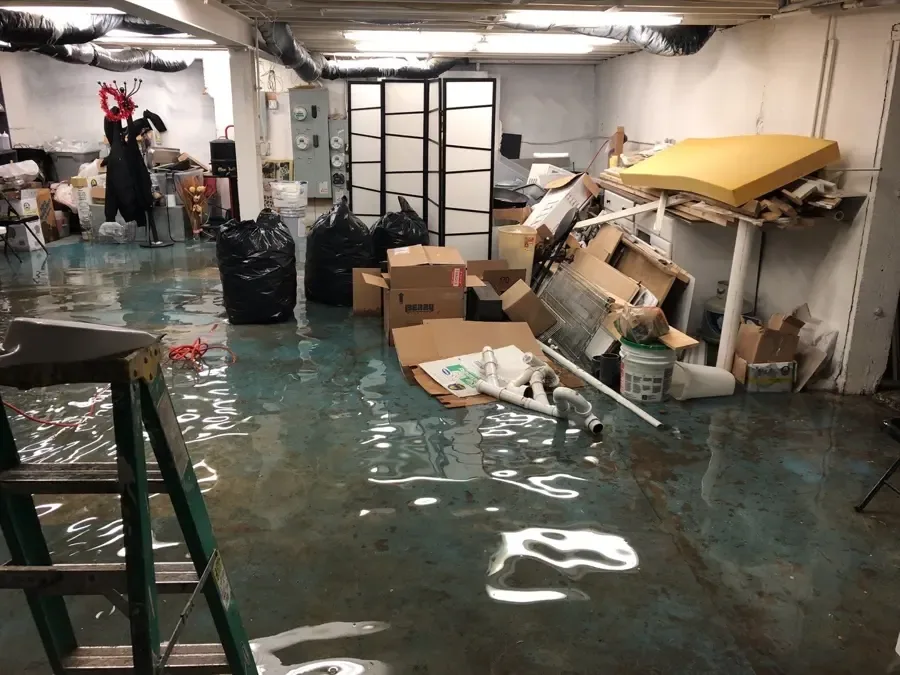
Photographs and an inventory help distinguish damaged stock from wet finishes. Coordinate relocation so items do not block inspection of wall bases, flooring or shared service areas.
Set the handover conditions by area
Record what each affected space needs before repair or renewed use. Drying checks, source correction and unfinished material work should remain visible to the responsible property contact.
How commercial water damage is handled in Glendale
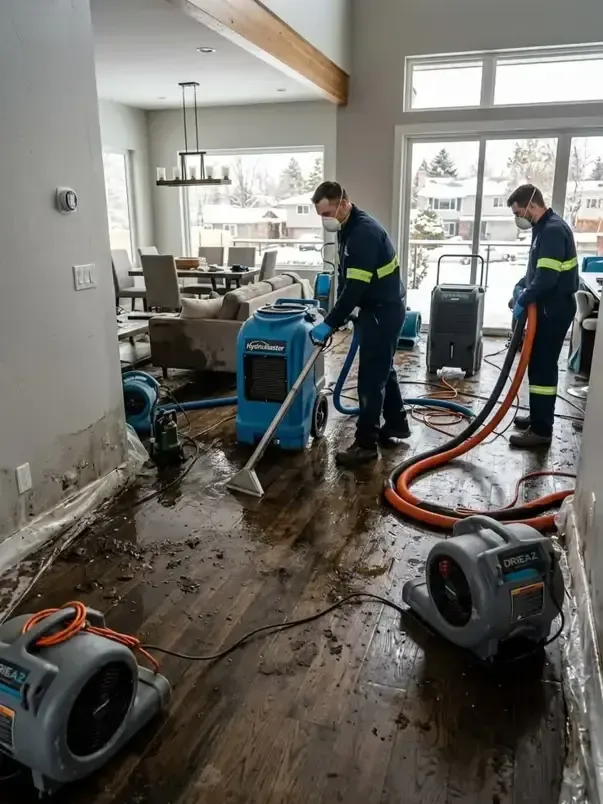
The mitigation crew establishes a moisture baseline, selects equipment for the affected assemblies and checks progress against dry reference materials. Recorded readings guide adjustments and the final equipment removal.
- 1
Build the scope by space
Use suite or room references to connect damage with the estimate. Distinguish tasks in private occupied areas from restoration affecting common building materials elsewhere.
- 2
Coordinate repairs and protected access
Address the leaking component while establishing safe routes. Organize equipment and material movement with the people responsible for the building and affected business operations.
- 3
Maintain access for drying
Monitoring must remain possible around stock and active rooms. Adjust equipment as materials are opened or business access needs become clearer during the restoration process.
- 4
Provide usable repair records
State which assemblies were dried, finishes removed and tasks remain. Clear area references allow subsequent trades and property contacts to act on the same information.
Match the plan to the kind of property
Americana at Brand combines shops, restaurants, apartments and condominiums. Glendale Galleria is a shopping mall, while Grand Central Business Centre is an industrial park on a former airport site. These distinct local settings illustrate why a mixed use building, retail suite and industrial property require different access and coordination discussions.
The actual loss still determines the work. A leak into stored stock needs a contents plan; water in a shared passage needs a safe route around the work area. Building management should identify who can authorize openings, equipment placement and entry to adjoining spaces.
- Record affected stock and equipment before relocation changes their original positions.
- Identify shared doors, service areas and passages needed during restoration work.
- Separate building material tasks from tenant equipment or inventory decisions clearly.
Organize water removal around the operating space
Accessible liquid can be recovered while the wet footprint is assessed, provided the work area is safe. Water extraction should connect with inspection of walls, floor layers and any adjoining suite reached by the release. Equipment cords and hoses must remain within a planned layout that accounts for access and electrical conditions.
Contaminated water changes handling decisions for furnishings and porous finishes. A business reopening decision needs the responsible parties to understand the condition of the space and the tasks still outstanding.
Insurance records for business property damage
Keep room or suite identifiers with photographs, source findings and itemized work notes. Separate building restoration from inventory loss and equipment repair. The record should explain which spaces were affected, why materials were removed and how drying measurements support the handover to subsequent repair work.
Structural drying can then follow retained assemblies through monitored checks. Any phased return to an area should account for equipment access and remaining material work rather than appearance alone.
Commercial water damage across Glendale and nearby towns
Commercial assessments need the affected suite, property contact and access restrictions before work is organized. Around Brand Boulevard and other business areas, identify shared passages and occupied spaces connected to the wet footprint.
The same service nearby: commercial water damage in La Crescenta, La Canada Flintridge, Burbank.
Related water damage services in Glendale

Commercial Water Damage questions in Glendale, CA
01Who should authorize cleanup in a leased business space?
The relevant property and tenant contacts should clarify authorization before work begins. Shared building materials and tenant contents may involve different decisions within the overall recovery scope.
02Can unaffected areas remain occupied during restoration?
That depends on safe separation, the water condition and access requirements. The work boundary should be assessed before occupancy decisions are made for adjoining rooms.
03Why inventory stock before moving it away from water?
A record preserves the original condition and location. It also helps distinguish contents handling from the building material tasks listed in the restoration estimate.
04Does a small puddle rule out damage in another suite?
Water can cross concealed openings or follow shared floor layers. Inspection should check connected areas when the observed path suggests moisture has traveled beyond the visible spot.
05Can drying equipment be relocated during business hours?
Placement serves the affected assemblies and monitoring plan. Any change should be coordinated so it preserves safe access and the conditions needed for material drying.
06What helps organize a commercial insurance claim?
Keep identified areas, damage photographs, source repairs and itemized restoration records together. Separate inventory and equipment details from building cleanup so each part remains clear.
Coordinate recovery around the affected operation
The property needs a clear sequence for water removal, materials and access. Discuss the wet footprint and operating requirements so restoration decisions can be documented by room or suite.
La Crescenta Water Damage Restoration · La Crescenta, CA