Ceiling Leak Water Damage in La Crescenta, CA
A ceiling stain may appear away from the actual entry point. La Crescenta restoration technicians assess falling-material and electrical hazards, trace moisture above the finish and coordinate drying after the source is controlled.
(888) 578-6508Discuss the ceiling before the stain expands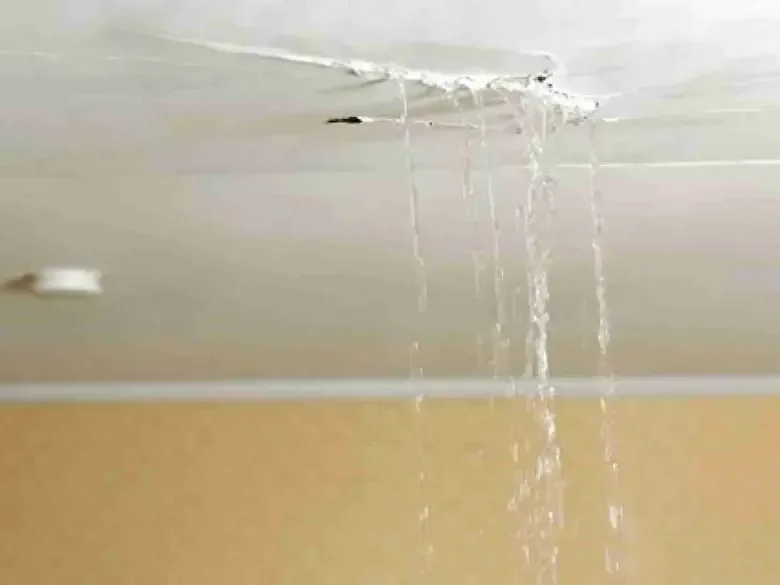
A brown ring does not reveal how much water sits above the ceiling. The assessment starts with a safe view of the area, including lights, fans and any visible sag. The crew then traces the source and checks the overhead assembly. Painting the mark before those steps can hide a wet cavity without resolving it.
First steps for ceiling leak water damage in La Crescenta
Clear the area below
The household keeps people and pets away from dripping fixtures, sagging board and loose plaster. A container should never require someone to stand beneath unstable material.
Identify a safe source control
If an upstairs fixture is overflowing, an accessible valve may stop the supply. Residents avoid entering wet electrical areas or opening the ceiling themselves.
Photograph from a doorway
Safe photos show the stain outline, surrounding fixtures and floor conditions. The owner notes whether the mark appeared during fixture use or during rainfall.
Report changes in shape
A growing bulge, new cracking or water from a light fitting changes the safety assessment. The response team needs those details before entering the room.
How ceiling leak water damage is handled in La Crescenta
The mitigation crew establishes a moisture baseline, selects equipment for the affected assemblies and checks progress against dry reference materials. Recorded readings guide adjustments and the final equipment removal.
- 1
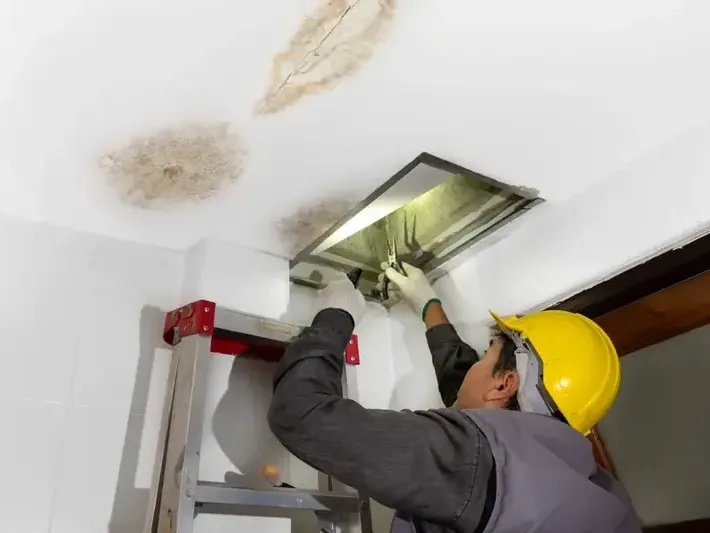
Assess overhead hazards
The restoration lead checks the room from a safe position, identifies electrical concerns and establishes an access plan before anyone works beneath saturated finishes.
- 2
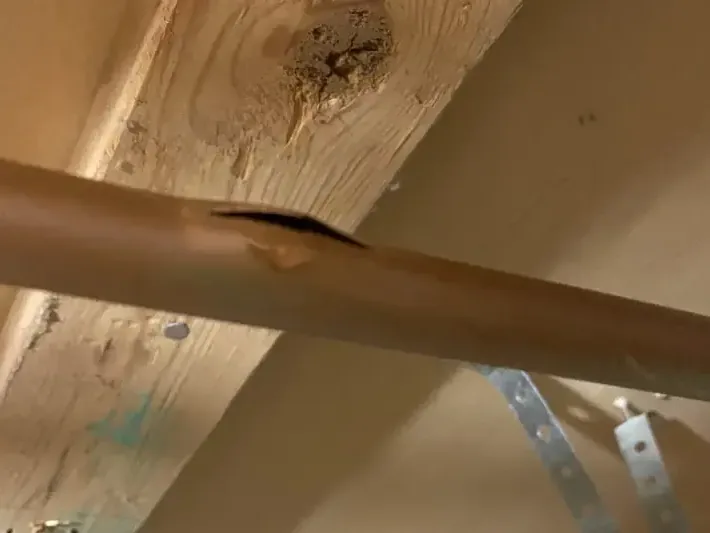
Trace the water route
The assessor compares the stain with readings above and around it, coordinating source investigation where a plumbing or roof component needs separate repair.
- 3
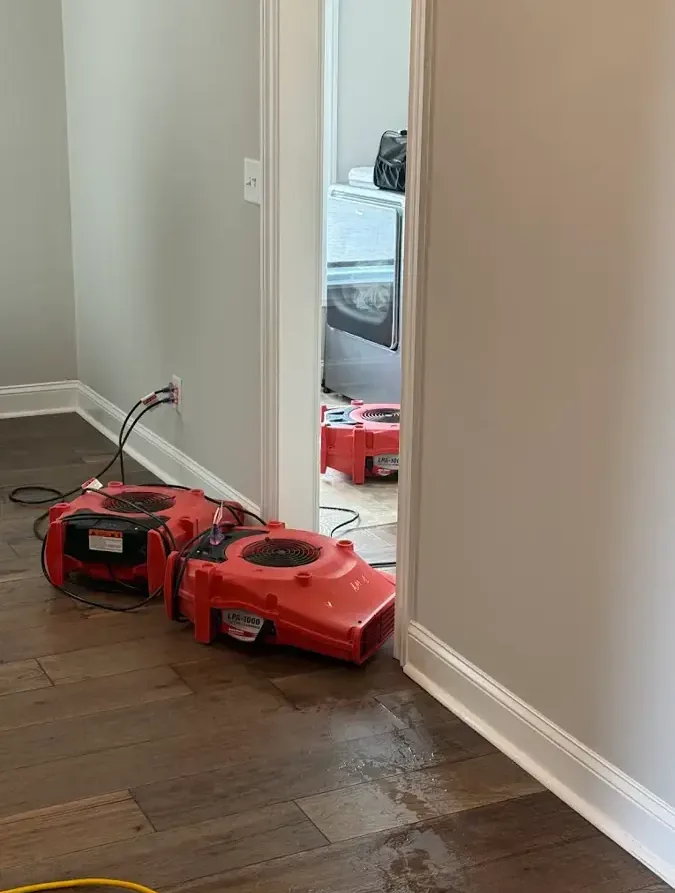
Open and dry selectively
The crew removes unsafe or unsalvageable material and evaluates insulation. Air movement and dehumidification then address the exposed cavity and the room receiving its moisture.
- 4
Confirm readiness for finishing
The technician records final readings and remaining access needs, allowing the repair contractor to close the cavity only after the moisture work is complete.
Tracing ceiling water above the visible mark
In La Crescenta-Montrose, County Planning's older-housing profile supports careful inspection of existing finishes and alterations. The assessor does not assume every ceiling uses the same board, plaster or insulation. Around Montrose, a bathroom, appliance or supply pipe above the stain may be relevant; the technician confirms the route before defining a repair opening.
Water can travel along framing and emerge at a seam or fixture. Moisture mapping compares the stained area with nearby ceiling bays and wall tops. Thermal imaging can identify temperature differences worth checking, but direct moisture readings determine whether material is wet.
- Locate safe access above or beside the affected ceiling assembly.
- Check insulation and adjoining wall tops where water may collect.
- Record cracks, sagging and softened finishes before any removal.
Keeping people away from unstable ceiling material
Occupants should not stand beneath a bulge, puncture it with a tool or handle a wet light fitting. The response team assesses the hazard before equipment placement. Foothill Boulevard properties can include different room layouts and uses, so the inspection also checks who needs access below the wet area. Near Briggs Boulevard, the assessor traces the ceiling leak through the building to identify its source.
Insurance documentation: drying the cavity and documenting the ceiling loss
The crew photographs the ceiling before opening, records the water source and marks the wet boundary. Technicians evaluate insulation for contamination and drying access, then track overhead materials separately from the floor below. The claim record includes category, equipment notes and daily measurements so the reason for each removal remains clear.
Finishing waits until the source is corrected and the relevant materials meet the drying goal. The insurer decides whether the cause falls within the policy. The Ready.gov water safety advice supports caution around electrical hazards; the EPA indoor air quality material explains the importance of moisture control inside buildings.
Ceiling leak water damage across La Crescenta and Los Angeles County
The restoration team serves La Crescenta, CA, including ZIP 91214 and 91224. Properties around Foothill Boulevard, Montrose and Pickens Canyon Park receive moisture assessment according to the actual source, access and affected materials.
Nearby coverage reaches La Canada Flintridge, Glendale, Burbank, Pasadena, South Pasadena.
Related water damage services in La Crescenta
Ceiling Leak Water Damage questions in La Crescenta, CA
01Should a ceiling bubble be punctured?
Occupants should avoid working beneath unstable material. A professional assesses the load, electrical exposure and safe removal method before releasing trapped water.
02Can a stain sit far from the leak?
Yes. Water can follow framing or a seam before it reaches the visible surface. The crew investigates the surrounding assembly instead of opening only the darkest spot.
03Does every ceiling leak come from the roof?
No. Upper-floor plumbing, fixtures and appliances can also leak. The technician compares the timing and moisture route with plumbing connections and the accessible roof space to locate the entry point.
04Can wet insulation stay in place?
That depends on contamination, material condition and drying access. Saturated or contaminated insulation may need removal so the cavity can be assessed and dried properly.
05When can the ceiling be painted?
The source should be repaired and the assembly should meet its drying goal first. Stain-blocking paint does not remove moisture from insulation or framing.
06What if water drips through a light?
Residents keep clear of the fixture and wet switches. A qualified electrical professional addresses that hazard before the drying crew operates equipment in the affected area.
Dry the assembly above the ceiling stain
The mitigation crew traces the source, checks hidden moisture and documents the overhead drying work. The dispatch team accepts active water-loss requests 24/7.
La Crescenta Water Damage Restoration · La Crescenta, CA