Structural Drying in La Crescenta, CA
A dry-looking surface can conceal moisture in the material behind it. La Crescenta drying technicians compare affected assemblies with dry references, adjusting airflow and dehumidification until the measurements support the repair handoff.
(888) 578-6508Discuss the materials that still measure wet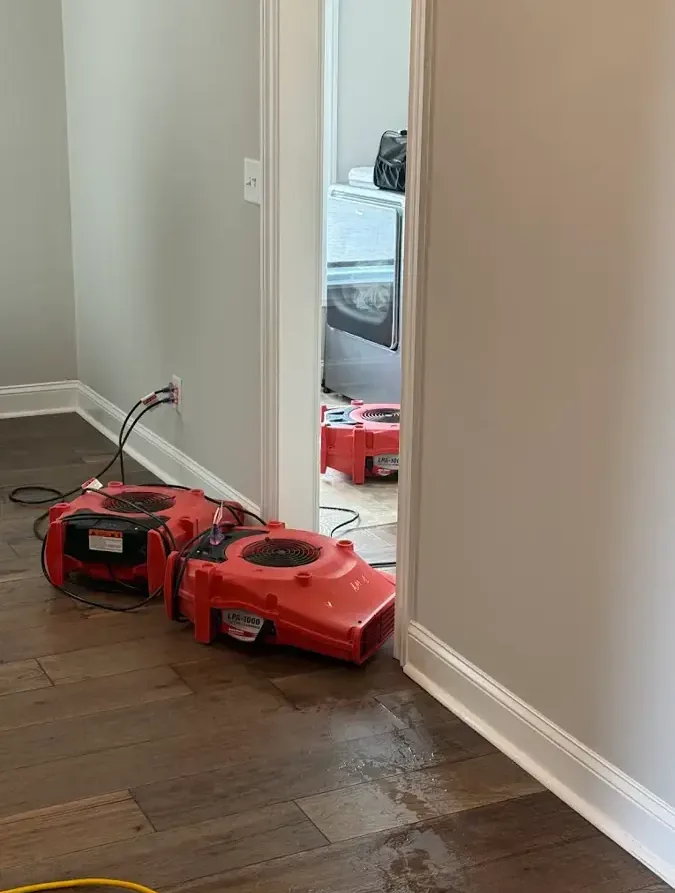
Structural drying starts with the material, not the number of fans. Wood, drywall, concrete and layered flooring release moisture differently. The technician establishes a dry comparison, identifies evaporation barriers and records the room conditions so the equipment plan addresses the actual wet assembly.
First steps for structural drying in La Crescenta
Confirm the source is controlled
The property owner shares repair information with the drying team. Equipment cannot finish an assembly that continues receiving water from an active leak or entry route.
Preserve equipment operation
Occupants leave the planned equipment arrangement intact and report power interruptions. Switching units off or opening the drying zone can change humidity and slow progress.
Explain access limitations
The assessor needs to know about locked rooms, occupied work areas and sensitive contents. The equipment plan should account for those constraints before setup.
Keep the measurement record
Daily readings and equipment changes help the owner understand progress. A visual improvement alone should not replace the documented goal for each wet material.
How structural drying is handled in La Crescenta
The mitigation crew establishes a moisture baseline, selects equipment for the affected assemblies and checks progress against dry reference materials. Recorded readings guide adjustments and the final equipment removal.
- 1
Set the baseline
The technician maps affected materials and dry references, records the room air conditions and confirms the source-control status before choosing a drying method.
- 2
Create an evaporation path
The crew removes accessible liquid and addresses barriers that trap moisture, retaining sound material where appropriate and opening only the areas needed for effective drying.
- 3
Balance the environment
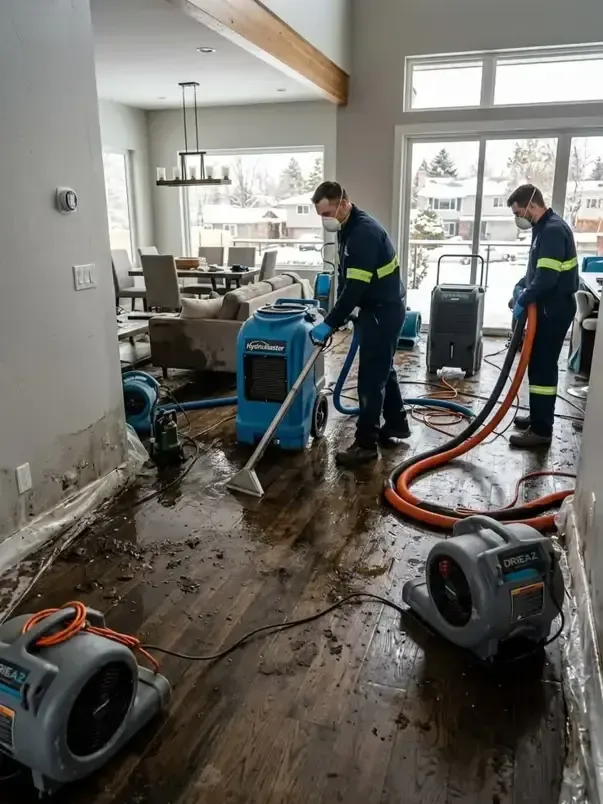
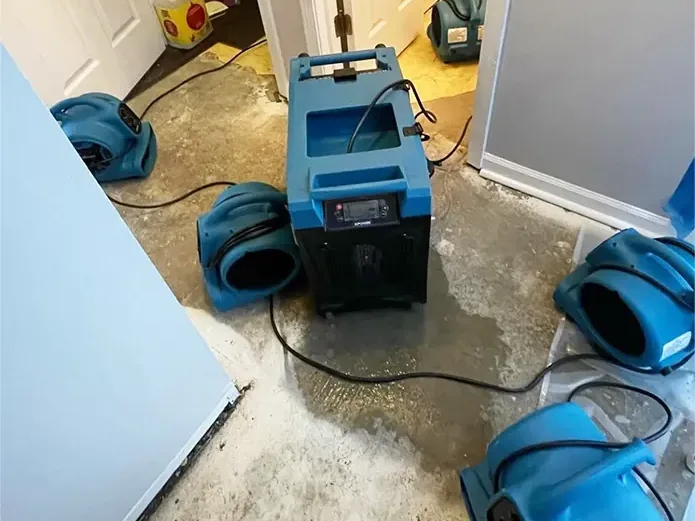
Air movers and dehumidifiers work together while the technician monitors moisture transfer, changing placement or capacity when the recorded trend shows a limitation.
- 4
Verify and hand off
The final inspection compares material readings with the established goals and documents remaining repair requirements before equipment leaves or finishes conceal the assembly.
Older buildings need a real moisture map
County Planning reports that most housing in La Crescenta-Montrose predates 1979. In Montrose, the drying team checks actual wall and floor layers rather than assuming a standard modern assembly. Alterations and low-permeability finishes can limit where moisture escapes, so access decisions should follow measurements and visible construction.
Foothill Boulevard properties can combine different occupied spaces and finishes. A drying zone may need separation from an unaffected room to keep humidity controlled. Near Rosemont Preserve, the assessor measures slab surfaces, timber flooring and accessible cavities separately. Each affected material receives a recorded starting point and a suitable dry comparison.
- Record wet material locations and suitable unaffected reference readings.
- Separate the water category from the drying class and material load.
- Track temperature and humidity alongside the material moisture trend.
Equipment changes follow the readings
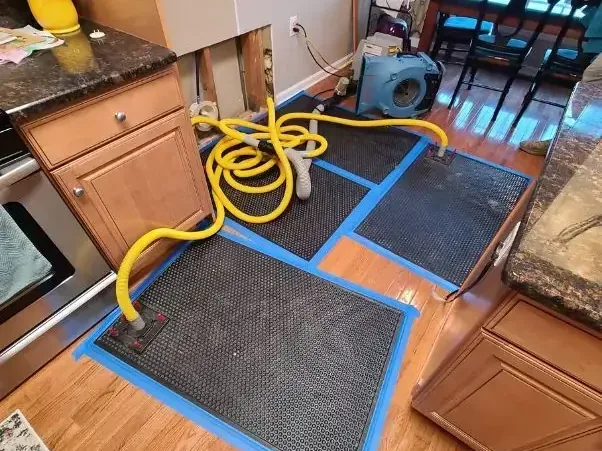
Extraction removes accessible liquid before evaporation becomes the main task. Air movers help moisture leave exposed surfaces; dehumidifiers remove that moisture from the room air. Dense or difficult assemblies may require a different drying approach. If readings stall, the technician checks source control, access, equipment operation and the measurement method instead of merely adding more time.
Insurance documentation: what the final drying record should explain
The mitigation record includes the baseline map, daily material readings, psychrometric conditions and equipment adjustments. It identifies the reason for any selective opening and records which materials required replacement. Final measurements should show why equipment can leave and what conditions the repair contractor still needs to address.
Owners keep those logs with the itemized scope for the insurance discussion. Coverage depends on the cause and policy, not simply the presence of drying equipment. The EPA indoor air quality resources discuss indoor moisture concerns, while Ready.gov flood safety information provides context for safe access after a water event.
Structural drying across La Crescenta and Los Angeles County
The restoration team serves La Crescenta, CA, including ZIP 91214 and 91224. Properties around Foothill Boulevard, Montrose and Pickens Canyon Park receive moisture assessment according to the actual source, access and affected materials.
Nearby coverage reaches La Canada Flintridge, Glendale, Burbank, Pasadena, South Pasadena.
Related water damage services in La Crescenta
Structural Drying questions in La Crescenta, CA
01What does the IICRC S500 standard contribute?
It provides a framework for evaluating water damage and planning restoration. The contractor applies the relevant methods to the actual category, materials and conditions of the loss.
02Are more fans always better?
No. Air movement must match the evaporation load and dehumidification capacity. Poor placement or insufficient vapor removal can leave a wet assembly without meaningful progress.
03Why measure humidity and the material?
Room air readings show the drying environment, while material readings show what remains inside the structure. One alone cannot describe the full progress of the job.
04Can a dry surface conceal moisture?
Yes. A covering or exposed face can dry before the deeper layer beneath it. The technician uses appropriate checks for the specific assembly.
05How long should equipment remain?
Equipment remains until the relevant measurements support the drying goal. Material density, contamination work, access and delays can extend the process beyond a simple calendar estimate.
06What happens if readings stop improving?
The drying team checks for a continuing source, blocked evaporation, equipment issues or a measurement limitation. The scope may need adjustment rather than unchanged equipment operation.
Let material readings set the repair timing
The drying crew maps the affected assemblies, adjusts the environment and documents the endpoint so reconstruction follows measured progress rather than surface appearance.
La Crescenta Water Damage Restoration · La Crescenta, CA