Roof Leak Water Damage in La Crescenta, CA
Rain entering a roof can soak attic insulation before a ceiling stain develops. La Crescenta drying teams follow the interior water route while a roofing professional addresses the opening that allowed the water inside.
(888) 578-6508Assess rainwater hidden in the attic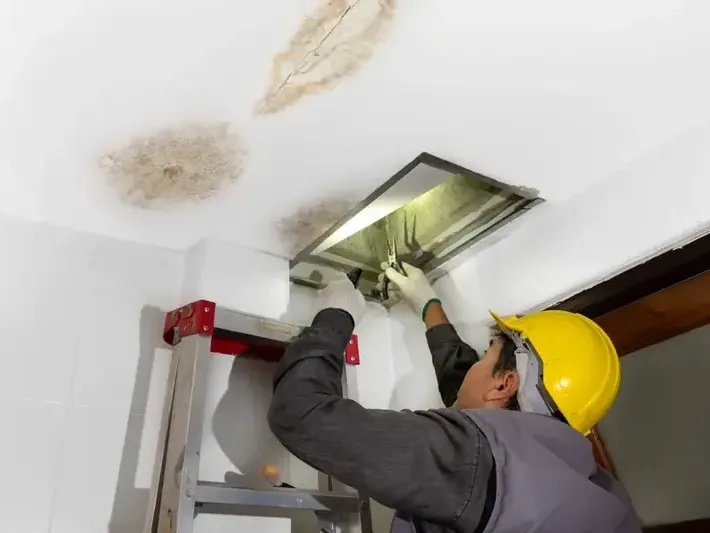
A repaired roof opening does not empty wet insulation or dry the ceiling below it. The mitigation crew checks the attic route, penetrations and adjacent framing after safe access is established. The roofer identifies and corrects the exterior defect; the restoration assessment defines the interior materials that absorbed the rainwater.
First steps for roof leak water damage in La Crescenta
Keep off the wet roof
The household avoids ladders and slippery roof surfaces during or after rain. A roofing professional evaluates exterior access and any needed temporary protection.
Clear the room below
Occupants move away from sagging ceilings and dripping electrical fixtures. Safe photographs can show the stain pattern without placing anyone beneath weakened material.
Record rainfall timing
The owner notes when dripping starts and whether it continues after rain ends. Those details help compare the indoor moisture route with exterior findings.
Plan both repair stages
The property owner coordinates source correction with interior mitigation. A patched opening and a dry-looking ceiling are not substitutes for measurements in wet insulation and framing.
How roof leak water damage is handled in La Crescenta
The mitigation crew establishes a moisture baseline, selects equipment for the affected assemblies and checks progress against dry reference materials. Recorded readings guide adjustments and the final equipment removal.
- 1
Compare exterior and interior findings
The assessor uses rainfall timing and the roofer's observations to trace the indoor route, documenting accessible wet materials before the opening is concealed.
- 2
Evaluate insulation
The mitigation crew determines which insulation and ceiling finishes can remain, removing compromised material where necessary to reach the wet structure safely.
- 3
Dry the accessible assembly
The technician balances airflow and dehumidification around exposed framing and adjoining surfaces, adjusting the plan when an enclosed pocket fails to show progress.
- 4
Document closure conditions
The final record identifies material readings, remaining repairs and any source-control limitation so the roofing and finish contractors can coordinate the next work.
Roof-water routes in the foothill setting
The San Gabriel Mountains border the community to the north. During winter rain, the owner records when a ceiling stain first appears and whether dripping continues after the weather clears. Near Rosemont Preserve, the assessor compares those observations with roof openings, wet framing and plumbing routes to locate the source.
Water can travel along a rafter, around a penetration or across insulation before it becomes visible in an occupied room. Older housing around Montrose may include alterations that change access, but the crew verifies the actual roof and ceiling assembly. The roofer checks flashing and penetrations while the mitigation technician maps the wet ceiling and attic materials.
- Match the indoor moisture route with the roofing professional's findings.
- Check insulation pockets and framing where water can remain after rainfall.
- Assess the ceiling below without standing under weakened material.
Roof leak safety without an improvised climb
Residents should not climb onto a wet roof or enter an attic with uncertain support, exposed wiring or saturated ceiling finishes. The contractor plans safe access and coordinates necessary exterior protection. Temporary source control and interior drying serve different purposes; neither should be mistaken for a complete permanent roof repair.
Insurance documentation: attic drying records for the repair handoff
The restoration crew photographs the entry path where accessible, records insulation removal decisions and maps moisture in the framing and ceiling. Equipment notes and daily readings show how the enclosed spaces respond. A dry room below is not sufficient evidence that an insulated roof cavity has finished drying.
The claim file separates the roof defect, resulting interior damage, mitigation work and proposed reconstruction. Owners confirm coverage for the cause with the insurer. The Ready.gov flood safety information reinforces safe behavior around water and power, while County Building and Safety provides the local starting point for repair-permit questions.
Roof leak water damage across La Crescenta and Los Angeles County
The restoration team serves La Crescenta, CA, including ZIP 91214 and 91224. Properties around Foothill Boulevard, Montrose and Pickens Canyon Park receive moisture assessment according to the actual source, access and affected materials.
Nearby coverage reaches La Canada Flintridge, Glendale, Burbank, Pasadena, South Pasadena.
Related water damage services in La Crescenta

Roof Leak Water Damage questions in La Crescenta, CA
01Can a roof repair leave wet insulation behind?
Yes. Closing the opening stops new rain but does not remove water already stored in insulation or framing. The interior assessment addresses those materials separately.
02Does a ceiling stain identify the roof opening?
Not always. Water may travel along framing before dropping into the room. The assessor compares the indoor route with the roofing findings.
03Should the attic be checked during rain?
Access depends on support, electrical conditions and the amount of water. Occupants should avoid an unsafe attic; trained professionals plan the inspection.
04Will every insulation section need removal?
The crew evaluates contamination, saturation, material condition and access. A blanket removal decision is inappropriate without checking the affected assembly.
05When can the interior ceiling be replaced?
The source needs correction and the relevant framing and cavity materials need acceptable moisture conditions. The repair team should review the drying record before closing the ceiling.
06Can 24/7 dispatch help with an active roof leak?
The response team accepts water-loss requests at any hour. The household should identify unsafe ceilings or fixtures and distinguish interior drying needs from permanent roofing repair.
Close the roof-water loss with a documented dry-out
The drying crew tracks moisture in accessible attic and ceiling materials, keeping the interior work coordinated with source correction and the finish repair plan.
La Crescenta Water Damage Restoration · La Crescenta, CA