Slab Leak Water Damage in La Crescenta, CA
Moisture escaping beneath a slab can reach flooring before a visible puddle appears. La Crescenta restoration technicians map the affected assembly and coordinate drying after the plumbing source has been located and controlled.
(888) 578-6508Discuss moisture rising through the floor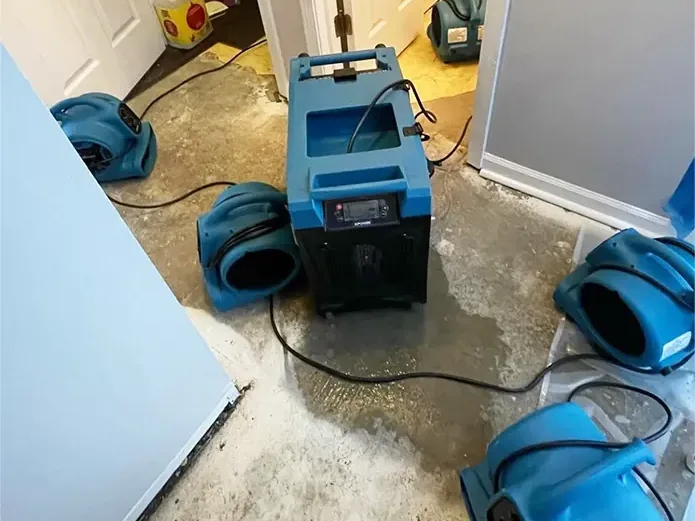
A warm patch, loose floor covering or damp joint can justify investigation, but none proves an under-slab pipe failure alone. The assessor compares moisture patterns with plumbing findings before defining the affected area. Plumbing repair stops the release; extraction and controlled drying address the water that has already entered the building.
First steps for slab leak water damage in La Crescenta
Limit continued supply
The owner reports any unexplained flow or spreading dampness and uses a safely accessible shutoff when appropriate. A plumber establishes the source before destructive access.
Leave coverings undisturbed
Residents avoid lifting glued flooring or cutting a slab without assessment. Unknown assemblies and concealed utilities require a planned opening rather than exploratory demolition.
Record where symptoms appear
Photos of lifted seams, damp trim and stained wall bases help the assessor compare the visible symptoms with the moisture pattern in adjoining rooms.
Keep repair records together
The property owner retains the plumber's findings and the restoration measurements. Those records distinguish a repaired leak from moisture still trapped in the floor assembly.
How slab leak water damage is handled in La Crescenta
The mitigation crew establishes a moisture baseline, selects equipment for the affected assemblies and checks progress against dry reference materials. Recorded readings guide adjustments and the final equipment removal.
- 1
Compare source evidence
The assessor reviews visible floor symptoms alongside the plumbing diagnosis, recording the affected boundaries before deciding which materials need removal or access.
- 2
Open only necessary layers
The mitigation crew evaluates the covering and underlayment, preserving sound material where appropriate while exposing wet areas that cannot release moisture otherwise.
- 3
Manage the vapor load
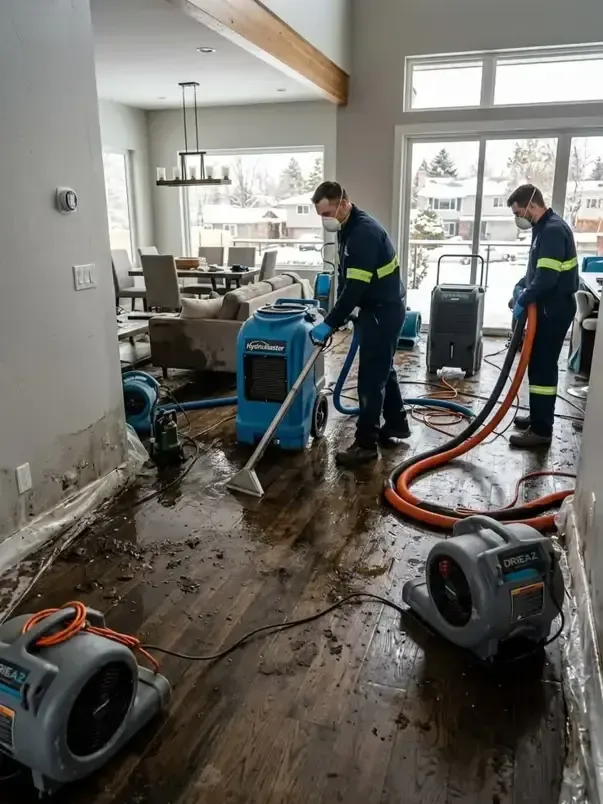
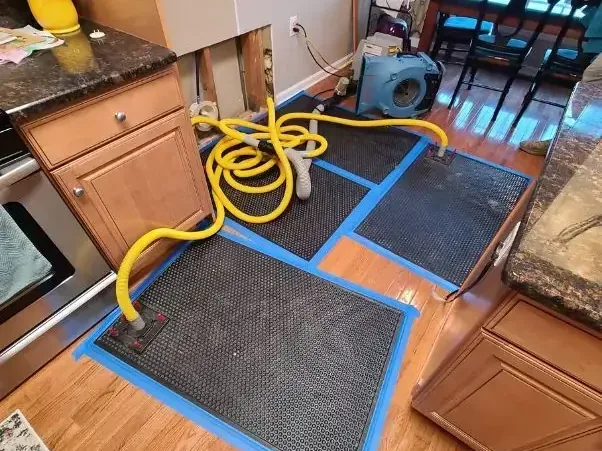
Dehumidification and directed air movement support evaporation from exposed assemblies. The technician tracks concrete separately from wood trim, wallboard and other adjacent materials.
- 4
Verify replacement conditions
The contractor records drying progress and flags remaining moisture limitations. Flooring installers apply the testing and substrate requirements for the specific replacement product.
Slab leak assessment in older local housing
County Planning identifies a substantial pre-1979 housing share in La Crescenta-Montrose. Around Foothill Boulevard and Montrose, that makes direct inspection more useful than assuming a standard floor assembly. A home may have several finishes or prior alterations. The moisture assessor records what is present rather than assigning a pipe material or foundation type from the property's age.
Water can migrate along a wall base or beneath a low-permeability covering. Technicians compare readings across adjoining rooms, mark suspect joints and check cabinet toe kicks where access is limited. The plumber's source investigation and the restoration moisture map answer different questions and belong in the same work discussion.
- Confirm the source before planning concrete access or flooring removal.
- Identify which finish layers block evaporation from the wet substrate.
- Record dry reference areas away from the suspected moisture path.
Controlled drying before a new floor
The drying crew removes accessible water and evaluates finishes that trap it against the slab. The flooring installer applies the manufacturer's concrete testing and installation criteria after the moisture-control work. Near Rosemont Preserve, the assessor compares the wet floor with adjoining wall bases and unaffected materials to identify the extent of the loss.
Once the plumbing repair is complete, the technician monitors concrete and adjoining wall materials separately. Persistent readings may indicate a remaining source, an inaccessible layer or a test method that needs refinement.
Insurance documentation: slab moisture documentation and repair decisions
Photos before access, the initial moisture map, plumbing findings and daily drying records help explain why flooring or trim required removal. The written scope separates pipe repair, mitigation and finish replacement. The insurer evaluates the policy and cause; documentation does not determine payment for each component.
The EPA WaterSense information supports attention to unexplained water use. For local construction questions, the County Building and Safety permit information is a starting point before a property-specific repair.
Slab leak water damage across La Crescenta and Los Angeles County
The restoration team serves La Crescenta, CA, including ZIP 91214 and 91224. Properties around Foothill Boulevard, Montrose and Pickens Canyon Park receive moisture assessment according to the actual source, access and affected materials.
Nearby coverage reaches La Canada Flintridge, Glendale, Burbank, Pasadena, South Pasadena.
Related water damage services in La Crescenta

Slab Leak Water Damage questions in La Crescenta, CA
01Does a warm floor prove a slab leak?
No. A warm area can prompt investigation, but a plumber must identify the source. Moisture measurements show the affected area rather than independently proving a pipe failure.
02Will fixing the pipe dry the floor?
Stopping the leak prevents further supply, but moisture can remain beneath flooring and inside wall bases. The mitigation team evaluates those materials after the plumbing work.
03Must all the flooring come out?
The decision depends on contamination, adhesion, damage and access for drying. Technicians assess each assembly rather than treating every finish in the house as a total loss.
04Can concrete look dry while holding moisture?
Yes. The exposed face can look dry while moisture remains deeper in the slab or beneath a covering. Appropriate measurements and installation criteria determine the next step.
05Does the area have one common foundation type?
The restoration assessment identifies the actual foundation and floor build-up at the property. The chosen drying method follows those layers and their condition, including any coverings that restrict evaporation.
06Is slab mitigation separate from plumbing repair?
Yes. The plumber addresses the failed supply or drain component. The drying contractor documents affected building materials and the work needed before finishes return.
Make the floor repair follow the moisture evidence
The drying team traces the wet footprint, exposes necessary layers and records progress toward a suitable repair handoff, with 24/7 requests for active losses.
La Crescenta Water Damage Restoration · La Crescenta, CA