Water Extraction in Burbank
A puddle that reaches the next doorway has already changed the cleanup scope. Extraction removes accessible water while the assessment follows its spread beneath edges, through transitions and into adjoining room materials.
(888) 578-6508Arrange removal from the wet rooms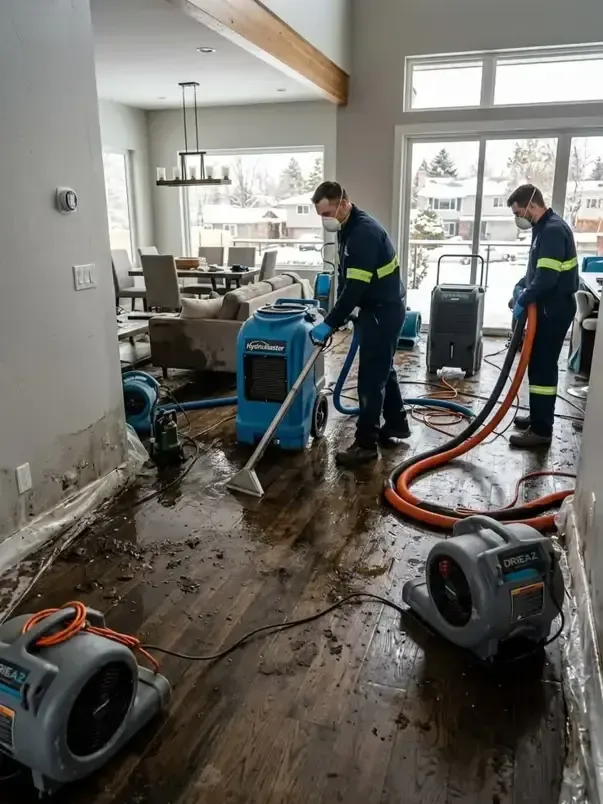
Water collects where the floor allows it to travel. A wet living room may connect to a hallway, cabinet base or adjoining room even when the deepest puddle stays near the source. Extraction begins with that visible water, then follows the floor edges that can conceal a broader loss.
First steps for water extraction in Burbank
Keep entry on dry flooring
Choose a dry route to the affected room. Avoid crossing pooled water where electrical outlets, appliance connections or hidden floor damage could make access unsafe.
Identify the continuing release
Explain whether a pipe, appliance or exterior entry is still adding water. Extraction cannot hold the wet boundary steady while an uncontrolled source continues feeding it.
Photograph low areas and contents
Capture the water at doorways, furniture legs and floor transitions from a safe position. Those images help establish which surfaces were affected before water recovery begins.
Arrange access around belongings
Identify heavy furniture and items blocking wet corners. Moving contents should support the extraction path while keeping affected objects separate from clean rooms and dry possessions.
How water extraction is handled in Burbank
The mitigation crew establishes a moisture baseline, selects equipment for the affected assemblies and checks progress against dry reference materials. Recorded readings guide adjustments and the final equipment removal.
- 1
Establish the collection points
Inspection locates pooled water and connected wet rooms. Water condition determines safe handling before equipment reaches the affected floor surfaces.
- 2
Select surface appropriate recovery
Extraction tools suit the floor and the water being removed. Accessible edges receive attention so the remaining moisture load is reduced before drying equipment is arranged.
- 3
Test the surrounding materials
Measurements beyond the obvious puddle identify wet wall bases and underlayers. Additional access can be discussed when a surface prevents assessment of the structure below.
- 4
Hand over to controlled drying
The removal record and moisture map establish the next scope. Equipment positions and monitoring points follow the materials retained after the initial extraction work is complete.
Older rooms need careful edge checks
Most Magnolia Park homes date to the 1940s. In an affected home, the inspection needs to identify the flooring and any underlying layers actually present. Water can move beneath a finish without leaving the entire surface visibly wet. Furniture feet, transitions and the edges of fixed cabinets are useful places to assess spread.
Magnolia Boulevard is a shopping corridor in Magnolia Park, while Riverside Drive is the main thoroughfare of the Rancho Equestrian District. A shop and a residence can need different access arrangements, but both benefit from identifying where equipment and recovered water can move safely.
- Keep electrical equipment and cords away from standing water until assessed.
- Record wet furniture bases before shifting belongings into a dry space.
- Check the next room when water reaches a threshold or opening.
Removal changes the drying workload
Recovering water from the surface reduces what must later evaporate. Carpet, hard flooring and porous underlayers need different extraction decisions. Materials exposed to dirty water may require removal rather than repeated passes with extraction equipment. The water source and elapsed conditions help determine the handling plan.
Once accessible water is removed, structural drying addresses moisture that remains in walls, floors and framing. Equipment placement should follow readings rather than the outline of the original puddle.
Insurance records for water extraction
Photographs taken before removal show the initial spread. Pair them with notes about the source, affected surfaces and any contents moved for access. The extraction scope should distinguish water recovery, material handling and the drying equipment needed afterward, so the owner can understand each charge.
The water damage cost calculator offers another starting point for organizing questions about removal and the work after it.
Water extraction across Burbank and nearby towns
Extraction planning covers Magnolia Park, the Rancho Equestrian District and other city areas. Describe the wet floor surface, available entrance and any remaining active release when discussing access to the property.
The same service nearby: water extraction in La Crescenta, Glendale, La Canada Flintridge.
Related water damage services in Burbank
Water Extraction questions in Burbank, CA
01Is a shallow puddle worth professional assessment?
Depth alone misses spread beneath finishes. A shallow release reaching several thresholds can affect more material than a deeper puddle contained on one accessible surface.
02Can a household vacuum remove the water?
Ordinary vacuums are not suitable for water recovery. After accessible water is removed, a moisture survey checks the flooring layers and surrounding walls for water the pickup could not reach.
03Does carpet always need to be removed?
The water condition, backing, underlay and extent of exposure affect that decision. Inspection determines whether extraction and drying are suitable or removal is needed.
04Will extraction leave the room completely dry?
Extraction removes accessible liquid and some absorbed water. Moisture remaining in assemblies needs a drying plan and measurements before the area can be considered ready.
05Should wet furniture stay in place?
Furniture can obstruct recovery and transfer staining to a floor. Safe movement and protective separation should be planned around weight, condition and available dry space.
06What happens when water returns after removal?
Returning water calls for another source assessment. An active leak or inaccessible reservoir must be addressed before the remaining restoration work can progress effectively.
Move beyond the visible puddle
Removal starts the recovery, but the floor edges and surrounding materials also need attention. Discuss accessible water, hidden spread and the drying decisions that follow.
La Crescenta Water Damage Restoration · La Crescenta, CA