Hardwood Floor Water Damage in Burbank
Raised board edges and dark joints can appear after the surface water has disappeared. Hardwood recovery starts by identifying the floor assembly and moisture beneath it before deciding whether drying, refinishing or replacement is appropriate.
(888) 578-6508Discuss changes in the wood floor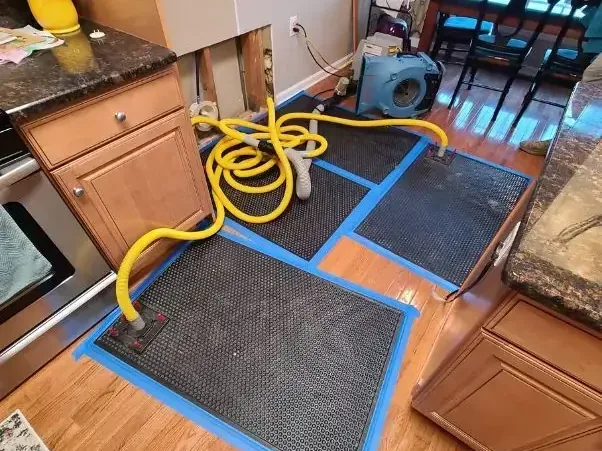
A floor that changes shape after a leak needs more than a cosmetic decision. Water may remain beneath boards while their exposed faces begin drying. The assessment considers the wood product, finish, attachment and supporting layers together, because the condition beneath the surface affects what can happen next.
First steps for hardwood floor water damage in Burbank
Limit traffic over changed boards
Raised edges and loose flooring can create an uneven walking surface. Keep occupants away from unstable areas and avoid dragging furniture across boards that have shifted after the release.
Record visible changes before treatment
Photograph cupping, discoloration and separation at joints from several safe positions. Include thresholds and adjoining flooring so the original footprint remains clear as the wood responds to drying.
Identify the floor product if possible
Save installation records or an unused board when available. Knowing the flooring type and attachment can help the assessment address drying access and later repair options more specifically.
Delay cosmetic work until moisture assessment
Avoid covering, sanding or refinishing the affected area while its condition is unsettled. Discuss retained board and substrate readings before committing to a repair that conceals the wet assembly.
How hardwood floor water damage is handled in Burbank
The mitigation crew establishes a moisture baseline, selects equipment for the affected assemblies and checks progress against dry reference materials. Recorded readings guide adjustments and the final equipment removal.
- 1
Identify the wet floor assembly
Product identification, finish condition and underlying layers are documented. Readings establish the affected area before decisions about board retention or replacement.
- 2
Recover water without adding damage
Accessible liquid is removed using methods suited to the floor and water condition. Contents and rugs are handled carefully so access improves without spreading contamination or scratching affected boards.
- 3
Apply suitable drying and track response
Equipment and access follow the retained assembly. Repeated readings consider both wood and supporting layers, while observed changes in shape or adhesion inform any needed adjustment to the plan.
- 4
Prepare an informed flooring decision
Final assessment combines moisture conditions with remaining damage. Records support the flooring discussion and repair options based on the assembly rather than surface appearance alone.
Start with the floor actually installed
Most homes in Magnolia Park date to the 1940s. A wood floor in an affected home needs direct identification, including any later installation or underlying layer. Material identification directs the drying method. The inspection should record the board condition and where moisture moves beyond the visible water marks.
Magnolia Boulevard runs through a shopping corridor in Magnolia Park, while Riverside Drive serves the Rancho Equestrian District. A residence and a shop with wood flooring may differ in access and furniture loads. The inspection needs room to reach board edges and transitions without dragging heavy contents over damaged surfaces.
- Photograph lifted edges and discolored joints before the floor condition changes.
- Avoid sanding a damp floor before the moisture imbalance has been assessed.
- Keep rugs and heavy stored items from hiding the affected board area.
Evaluate the substrate along with the boards
Targeted extraction and drying may help suitable materials, but water condition and physical damage can limit retention. Access beneath a finish may be necessary when moisture cannot escape through the surface. The proposed method should explain what remains in place, how readings are obtained and what would trigger a different material decision.
A suspected below floor release also needs slab leak assessment. Source repair and substrate evaluation should precede any plan to install another wood finish over the affected area.
Insurance documentation for damaged hardwood
Keep photographs of the initial board pattern, affected transitions and furniture staining. The estimate should separate extraction or drying from later sanding, refinishing and replacement. Moisture records and descriptions of physical damage support the flooring discussion, especially where the final repair choice depends on the condition revealed during drying.
Before setting a repair date, the drying estimate tool can help organize timing questions for discussion with the restoration contact.
Hardwood floor water damage across Burbank and nearby towns
Wood floor assessments can be arranged in Magnolia Park, the Rancho Equestrian District and other city areas. Describe the board changes, water source and affected adjoining rooms when discussing inspection of the floor assembly.
The same service nearby: hardwood floor water damage in La Crescenta, Glendale, La Canada Flintridge.
Related water damage services in Burbank
Hardwood Floor Water Damage questions in Burbank, CA
01Does cupping mean the entire floor needs replacement?
The floor needs assessment before that decision. Product type, water exposure, attachment and the condition after drying all influence the practical repair options for affected boards.
02Can sanding correct raised edges while boards are wet?
Sanding before moisture conditions stabilize can complicate the final result. A flooring decision should follow assessment of the boards and the supporting material beneath them.
03Why measure the substrate as well as the wood?
Moisture below the boards can continue affecting the floor after the face appears dry. The retained assembly needs evaluation before repairs cover the underlying layer.
04Will every wood product respond the same way?
Different products, finishes and attachments respond differently to water. The assessment must identify the installed floor rather than selecting a method from appearance alone.
05Should furniture stay on the affected area?
Heavy contents can obstruct measurements and drying access. Safe relocation may be needed, with care to prevent scraping raised boards or transferring stains from wet furniture bases.
06What information helps with a later flooring claim?
Initial photographs, product details, moisture records and descriptions of persistent damage are useful. Keep drying charges separate from the proposal for sanding, refinishing or replacement.
Make the repair decision after assessment
A wet floor needs attention above and below the boards. Arrange an evaluation of moisture, attachment and physical damage before choosing refinishing or replacement work.
La Crescenta Water Damage Restoration · La Crescenta, CA