Hardwood Floor Water Damage in Glendale
Raised edges and changed board shape tell only part of a wet floor's story. Glendale hardwood assessment considers the flooring and its substrate together before deciding whether drying access or selective removal is needed.
(888) 578-6508Discuss changes in the wet boards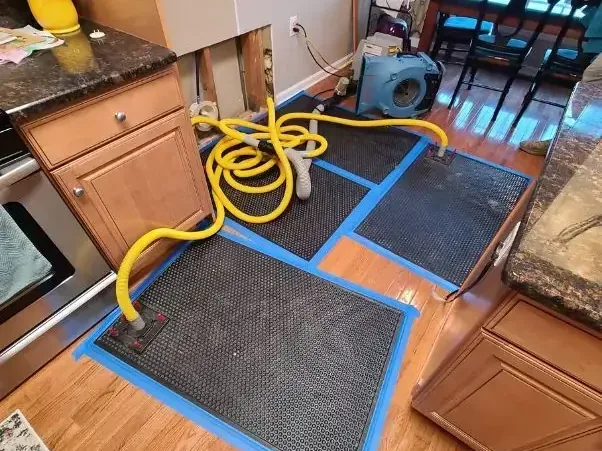
A wooden floor can look wetter at its joints than at the center of each board. Water may also remain beneath the installed flooring after the exposed surface has been wiped. Assessment needs to connect visible shape changes with moisture inside the wood and the condition of the supporting layer below it.
First steps for hardwood floor water damage in Glendale
Recover surface water first
Accessible liquid needs removal while cosmetic work waits. Keep rugs and other coverings away from damp boards so inspection remains possible across the affected floor.
Describe the pattern across the boards
Photographs of lifted edges, separated joints and affected transitions preserve the initial appearance. Include nearby wall bases and doorways where water may have passed into adjoining rooms or concealed layers.
Assess the supporting layer beneath the wood
The floor system and available edges determine access to the substrate. Measurements should distinguish the boards from material underneath so a dry surface does not hide a remaining moisture problem.
Choose the repair after the material checks
Drying results, physical condition and the installed flooring system inform retention or replacement. Document remaining damaged areas before sanding, refinishing or new boards change the evidence of the original water loss.
How hardwood floor water damage is handled in Glendale
The mitigation crew establishes a moisture baseline, selects equipment for the affected assemblies and checks progress against dry reference materials. Recorded readings guide adjustments and the final equipment removal.
- 1
Describe the floor system
Record installed materials, board shape and wet boundaries. Identifying the flooring system helps explain which measurement and access methods are appropriate for the affected room.
- 2
Connect surface and substrate conditions
Inspect accessible supporting layers and nearby wall edges alongside the boards. Distinguish moisture remaining within the wood from water trapped beneath the installed flooring.
- 3
Select drying or access removal
The approach depends on contamination, damage and access to wet layers. Document lifted sections and explain how each opening supports material assessment or drying work.
- 4
Separate recovery from cosmetic repair
Final checks establish remaining damage and retained materials. A repair scope can then address replacement or refinishing with moisture history and affected boundaries clearly documented.
Identify the installed floor before selecting equipment
Different wooden flooring systems respond differently to water and access. The inspection should establish the material present, how it is installed and where moisture can be measured. A finish coating or tightly fitted edge can limit access to the layer that holds water, so the drying plan should explain how that layer will be reached.
Downtown Glendale includes newer apartments, South Glendale has apartments and condominiums, and Adams Hill is another residential neighborhood. For any affected property, flooring decisions should use the actual boards and substrate found in the room. The location helps arrange access; material condition determines the restoration choices.
- Photograph lifted edges and transitions before rugs or furnishings are moved.
- Record measurements from the boards and accessible supporting layers separately.
- Keep wet coverings off the floor while its condition is evaluated.
Evaluate drying before cosmetic correction
Surface sanding or refinishing should not begin simply because the floor feels dry underfoot. Moisture differences can remain between boards and their underside. Depending on the installed system and condition, targeted drying equipment or selective removal may provide access to the affected substrate. Physical damage and contamination also influence whether material can remain.
Where concrete lies beneath the flooring and a pipe source is involved, slab leak damage assessment coordinates the floor work with source investigation. The wood and concrete still require separate material decisions.
Insurance records for water affected flooring
Preserve photographs of the initial board shape, affected room boundaries and any exposed substrate. The estimate should separate water recovery, drying access and replacement or refinishing. Records of the installed material and removed sections can support a clear explanation of why particular areas needed different treatment.
Structural drying checks track the remaining moisture before the final floor decision. Any transition into an unaffected room should be documented so the extent of proposed repair is easy to understand.
Hardwood floor water damage across Glendale and nearby towns
Wood floor assessment starts with the installed material, wet footprint and access beneath available edges. At a property in Adams Hill or near Brand Boulevard, those conditions shape the drying and repair discussion.
The same service nearby: hardwood floor water damage in La Crescenta, La Canada Flintridge, Burbank.
Related water damage services in Glendale

Hardwood Floor Water Damage questions in Glendale, CA
01Do raised board edges mean the entire floor needs replacement?
The material, damage and underlying moisture need assessment first. The decision should consider the installed flooring system and the condition of each affected area rather than appearance alone.
02Can sanding begin while the underside remains damp?
Cosmetic correction should follow material moisture checks. Changing the surface before the flooring and substrate are assessed can complicate decisions about the finished floor's condition.
03Why measure the substrate separately from the boards?
Water can remain below the flooring even as the exposed wood changes. Separate readings help identify which layer still needs access, drying or another restoration decision.
04Are drying mats suitable for every wooden floor?
Equipment selection depends on the floor system, contamination and material condition. An assessment determines whether targeted drying can reach the wet layer without unsuitable treatment of the finish.
05Should wet area rugs stay on the floor?
Wet coverings can hold moisture against the boards and conceal surface changes. Their removal and handling should be planned according to water conditions and safe room access.
06What records help define the damaged flooring boundary?
Photographs of room transitions, board changes and exposed layers provide context. Keep them with moisture locations and the written reasons for any selective removal or replacement.
Make the floor decision with the layers visible
A useful plan connects the boards with the substrate holding them. Discuss moisture checks and access before refinishing or replacement conceals the current condition of the affected floor.
La Crescenta Water Damage Restoration · La Crescenta, CA