Slab Leak Water Damage in Glendale
A damp floor over concrete can conceal water far beyond the first visible mark. Slab leak cleanup in Glendale connects pipe investigation, flooring access and material readings before replacement work closes the area.
(888) 578-6508Discuss moisture coming through the floor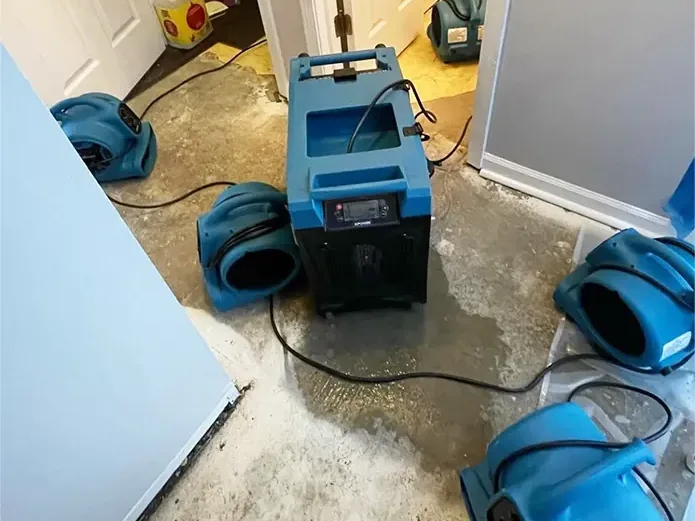
Water emerging at a floor joint calls for a closer look beneath the finish. At a Glendale property with a slab foundation, the cleanup question is how much moisture reached the concrete, flooring and wall base. Locating and repairing the pipe is separate from removing water already stored in those building materials.
First steps for slab leak water damage in Glendale
Describe the first floor change
Record where dampness, discoloration or separation appeared. Photographs before coverings are lifted preserve the starting condition and visible extent of the affected finish.
Connect damage checks with pipe findings
Arrange source investigation while accessible materials are assessed. A successful pipe repair stops new leakage, but the retained moisture still needs a defined cleanup and drying scope.
Plan selective access around occupants
Discuss fixed furnishings, walking paths and shared rooms before opening the floor. Protect dry finishes and keep any exposed concrete or plumbing access clearly separated from occupied areas.
Measure before covering the slab
Check the affected substrate and remaining wall edges as drying proceeds. Replacement planning should use the final material condition rather than the date when the leak was repaired.
How slab leak water damage is handled in Glendale
The mitigation crew establishes a moisture baseline, selects equipment for the affected assemblies and checks progress against dry reference materials. Recorded readings guide adjustments and the final equipment removal.
- 1
Compare wet and unaffected locations
Establish reference conditions alongside the damp area. Readings should identify the material and location so subsequent checks can measure changes at those points.
- 2
Expose the moisture holding assembly
Access depends on the installed floor system and damage beneath it. Document removed materials and whether each opening serves plumbing repair or restoration work.
- 3
Manage drying around exposed concrete
Equipment supports moisture removal from the accessible substrate and nearby materials. Adjust the plan as additional wet layers appear or readings show uneven progress.
- 4
Define the flooring handover
Record remaining repairs and the measured slab condition. The installer can assess the substrate against the requirements of the replacement flooring and adhesive system.
Find the damp layers before choosing the opening
A plumber's investigation and a restoration moisture map answer different questions. The plumber follows the source; the moisture map follows the damage. Combining those findings helps avoid treating the first visible floor spot as the whole loss. Adhesive, underlayment and nearby wall edges can keep moisture concealed after the pipe no longer leaks.
South Glendale contains apartments and condominiums. Where a slab leak affects shared or occupied spaces, access should be coordinated before removing finishes. A property near Brand Boulevard may have a different layout and floor covering, so its own material checks establish the drying boundary and the area that needs protection.
- Note changed flooring texture, damp joints and affected wall base finishes.
- Record plumbing access openings separately from removal needed for material drying.
- Keep removed floor samples available when matching replacement materials becomes necessary.
Concrete and floor coverings need separate decisions
Some finishes can prevent moisture from escaping the slab surface. Selective removal may make the concrete accessible for measurement and drying, while damaged coverings need their own evaluation. A drying plan should identify the exposed substrate, nearby wet assemblies and the conditions required before new floor materials are placed over the area.
If boards are involved, hardwood moisture assessment addresses their condition independently. Concrete readings alone cannot describe what has happened inside the wood or underneath an attached flooring system.
Insurance documentation for concealed pipe damage
Keep the plumbing diagnosis, discovery photographs and moisture map together. Distinguishing pipe repair from water damage cleanup makes the estimate easier to follow. The record should describe why finishes were opened, which materials remained wet and how progress was checked at each accessible location.
Until the area is secure, avoid walking over lifted flooring or exposed openings. Material drying work can then proceed with protected access and documented decisions about the remaining surfaces.
Slab leak water damage across Glendale and nearby towns
For a property near Central Avenue, Adams Hill or other local areas, identify whether the affected floor sits on concrete. Access, floor coverings and the leak investigation shape the cleanup scope.
The same service nearby: slab leak water damage in La Crescenta, La Canada Flintridge, Burbank.
Related water damage services in Glendale
Slab Leak Water Damage questions in Glendale, CA
01Does damp flooring always identify a leaking pipe below concrete?
No. Water can reach a floor from several directions. Source investigation needs to establish the cause before an opening or pipe repair is selected.
02Is the plumbing repair included in the drying scope?
The estimate should distinguish those tasks. Repair addresses the failed pipe, while restoration covers the water affected finishes, accessible substrate and moisture remaining nearby.
03Why can concrete remain damp after the leak stops?
Concrete and covered floor layers can retain moisture after the supply is isolated. Drying access and material measurements show how the remaining assembly is changing.
04Can flooring be installed as soon as the surface looks dry?
Installation depends on substrate conditions and the flooring system's requirements. Visible appearance should be supported by appropriate measurements before a new covering conceals the area.
05Must every room be opened for a slab leak?
Access follows the damage found at the property. Moisture mapping and the plumbing findings help define which areas need inspection, removal or targeted drying work.
06What records explain damage found beneath the floor?
Photos of lifted finishes, identified wet layers and the source repair findings provide context. Keep them with drying measurements and the written cleanup scope.
Connect pipe repair with floor recovery
The repaired pipe is one part of the work. Establish a plan for exposed concrete, remaining wet materials and the conditions needed before replacement flooring is installed.
La Crescenta Water Damage Restoration · La Crescenta, CA