Burst Pipe Water Damage in Burbank
The sound of rushing water can be followed by damage far beyond the broken fitting. Once a safe shutoff stops the release, the next task is tracing where pressurized water reached floors, walls and contents.
(888) 578-6508Discuss the sudden pipe release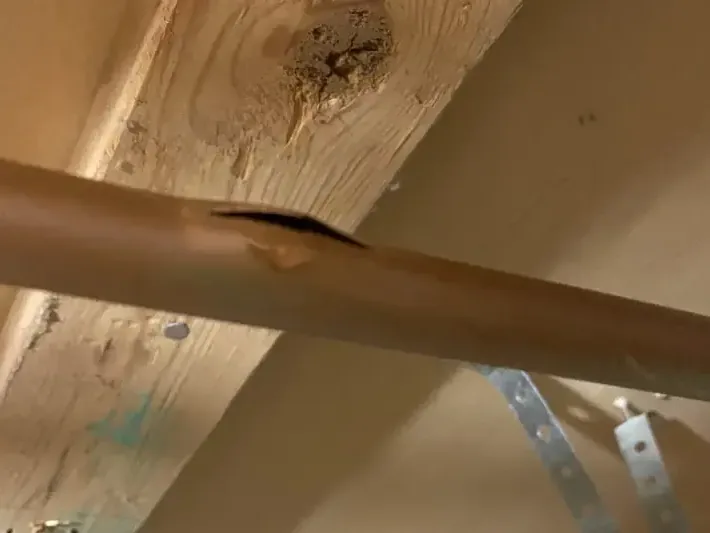
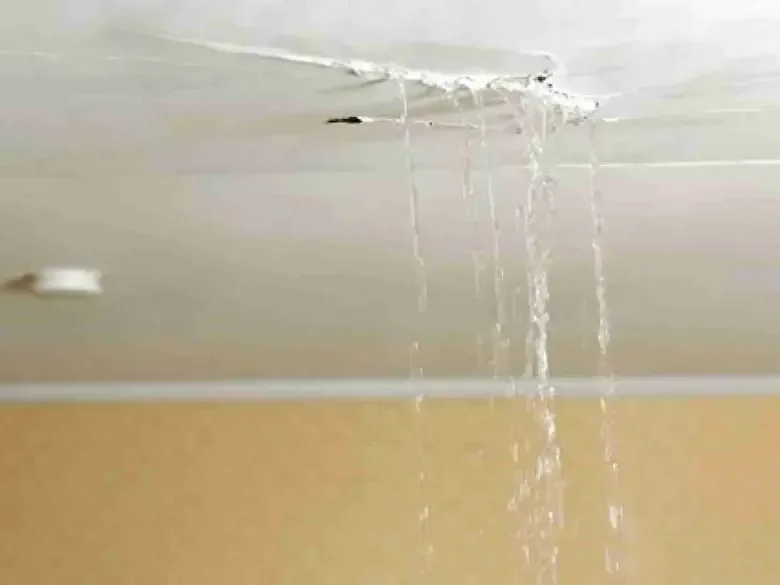
A broken supply pipe can spray into a cavity before water appears at the nearest doorway. Shutting off the release limits new damage, but the cleanup assessment still needs to reconstruct its path. Wet trim, ceiling marks and soaked belongings can reveal areas that the first puddle did not show.
First steps for burst pipe water damage in Burbank
Use a safe accessible shutoff
If the relevant valve is accessible from a dry location, stopping the supply can limit continued release. Avoid entering standing water to reach electrical or unfamiliar utility controls.
Keep occupants outside affected cavities
Water from a pipe can saturate overhead material or enter electrical spaces. Restrict access beneath sagging surfaces and around exposed connections until the hazards have been assessed.
List every room reached
Track visible water at doorways, wall bases and lower ceilings. A room list gives the assessment a starting route and helps identify spaces hidden behind closed doors.
Arrange source repair and cleanup
Tell each contact whether the source is controlled and which work has already occurred. Keep pipe repair, water removal and retained material drying organized as distinct project tasks.
How burst pipe water damage is handled in Burbank
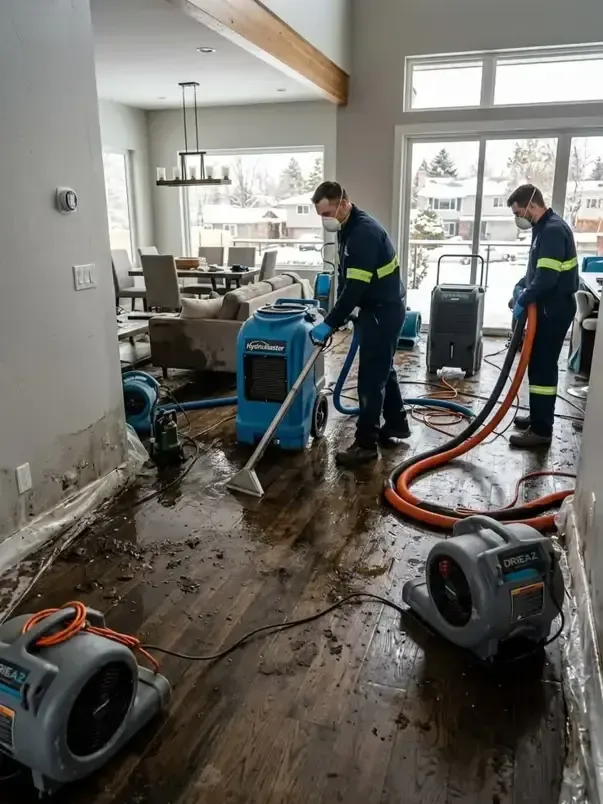
The mitigation crew establishes a moisture baseline, selects equipment for the affected assemblies and checks progress against dry reference materials. Recorded readings guide adjustments and the final equipment removal.
- 1
Confirm the release has stopped
The source and access conditions are assessed first. Repair coordination addresses continuing leakage while inspection locates escaped water inside the property.
- 2
Recover water along its path
Extraction follows the connected wet areas rather than stopping beside the failed pipe. Movable contents are considered as part of reaching floor edges and lower surfaces.
- 3
Decide what can stay
Wet wallboard, insulation and floor layers are assessed for condition and drying access. Removal decisions are documented so the owner understands the work beyond the original break.
- 4
Measure retained materials through drying
Selected points in the remaining structure receive repeated readings. Progress records support equipment adjustments and identify when an assembly is ready for the next repair stage.
Sudden releases have a local history
The 1971 San Fernando earthquake caused flooding in Burbank buildings from broken pipes and sprinkler risers. That event illustrates the amount of interior damage a failed pressurized system can create. For a present loss, the actual break location and wet materials establish the work required.
Downtown restaurants along San Fernando Boulevard need access organized around occupied rooms and contents. In Magnolia Park, an affected older home may need a different sequence for moving furniture or exposing a wet cavity. The Media District adds commercial settings where an authorized property contact helps coordinate entry.
- Stay clear of water around energized devices or exposed electrical connections.
- Record the shutoff time and any rooms reached before the release stopped.
- Keep photographs of the failed component with the plumber's repair description.
Follow the release beyond the break
Pressure can drive water against materials above or beside a pipe. Inspection should include the surrounding assembly and any lower room reached by gravity. Saturated insulation, loose finishes and concealed floor layers require separate decisions about retention and removal before equipment placement is finalized.
Water extraction addresses liquid remaining on accessible surfaces. Moisture readings then define drying needs in walls and flooring after the visible water is gone.
Insurance records for a burst supply pipe
Keep source repair costs distinct from emergency mitigation and later reconstruction. Initial photographs, material removal notes and equipment records help explain why the cleanup extended beyond the pipe opening. Save damaged component details when available and document the condition of adjacent rooms before finishes are replaced.
For planning after shutoff, the drying time estimator helps frame questions to discuss alongside actual material readings.
Burst pipe water damage across Burbank and nearby towns
A sudden pipe release can affect homes or businesses in Downtown Burbank, the Media District and Magnolia Park. Describe the shutoff status and rooms reached by water when arranging cleanup access.
The same service nearby: burst pipe water damage in La Crescenta, Glendale, La Canada Flintridge.
Related water damage services in Burbank

Burst Pipe Water Damage questions in Burbank, CA
01Does stopping the supply finish the emergency work?
It stops new water from that source. Escaped water can remain inside floors and cavities, so extraction and material assessment may still be needed afterward.
02Can a burst pipe damage the room below?
Water can travel through openings and along framing before dripping below. Lower ceilings and wall connections need assessment whenever the release reaches an upper assembly.
03Should the broken pipe be discarded immediately?
Ask the repair trade and insurer about documentation before disposal. Photographs and a written description of the failed component can support a clearer project record.
04Why open a wall away from the break?
Water may collect at a lower point within the cavity. Moisture readings and material condition determine where access is useful, beyond the opening needed for repair.
05Can furniture remain in the wet room?
It depends on access and exposure. Heavy contents can obstruct extraction, while damp bases may stain flooring; relocation and protection should match the item's condition.
06How is the drying endpoint determined?
Readings from retained materials are compared with the selected drying goals. The technician checks below the surface, where moisture can remain after the finish looks dry.
The repair is one part of recovery
After the supply stops, remaining moisture still needs a plan. Discuss water removal, wet cavities and the records that connect the original release to the drying work.
La Crescenta Water Damage Restoration · La Crescenta, CA