Storm Flood Cleanup in Burbank
Water arriving through a doorway brings a different cleanup problem from a clean supply drip. The response needs to account for the route outdoors, debris carried inside and every porous surface reached by the intrusion.
(888) 578-6508Discuss water entering from outdoors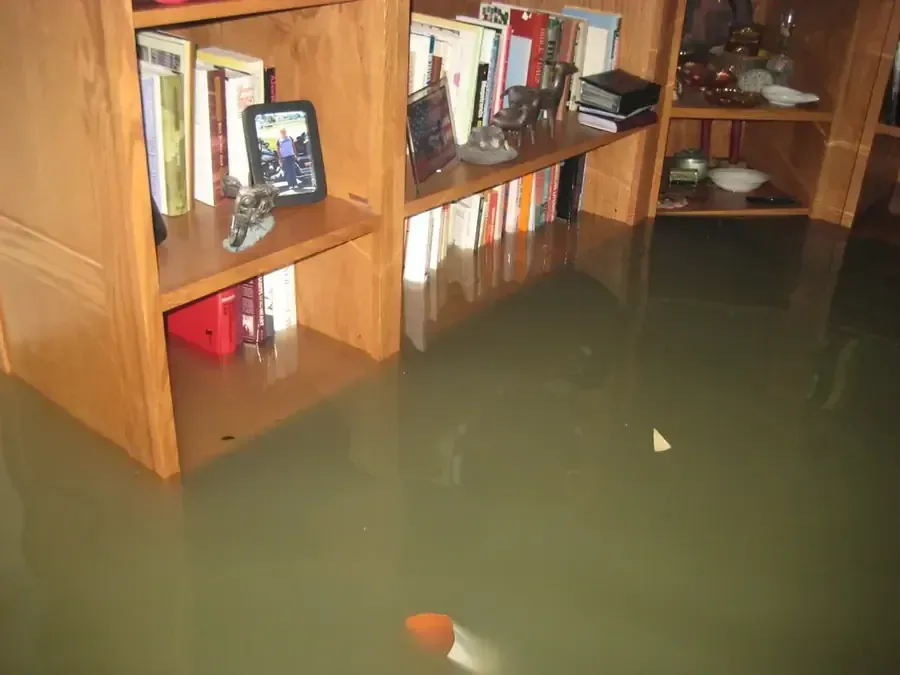
A wet threshold may be only the beginning of a storm loss. Once outdoor water crosses into a room, it can leave sediment along flooring seams and soak porous contents at floor level. The cleanup assessment needs to consider what entered with the water as well as how much remains.
First steps for storm flood cleanup in Burbank
Wait for safe property access
Do not cross moving water or enter a room with electrical uncertainty. Access decisions come before salvaging belongings or attempting to move water out of the building.
Identify where outdoor water crossed
Note the doorway or opening involved and any continuing entry. That observation helps separate exterior source control needs from the indoor removal and cleaning work.
Record contents at floor level
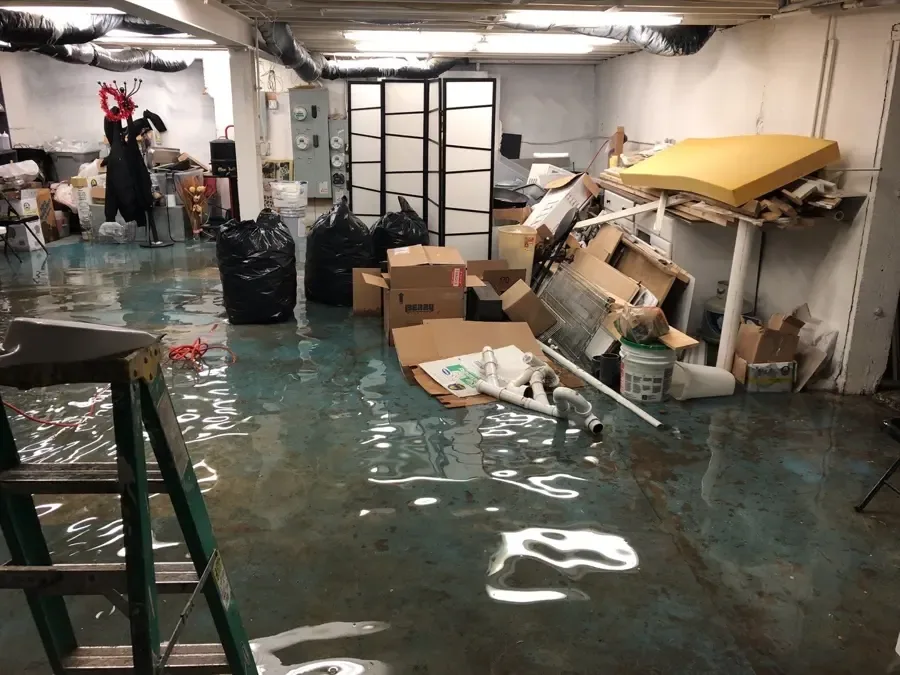
Photograph wet boxes, furniture bases and absorbent furnishings without handling contaminated material. An item record helps organize disposal and cleaning decisions before the room is cleared.
Keep dirty routes contained
Avoid carrying wet debris through unaffected rooms. Discuss a removal path and a separate place for affected items so cleanup can proceed without spreading contamination indoors.
How storm flood cleanup is handled in Burbank
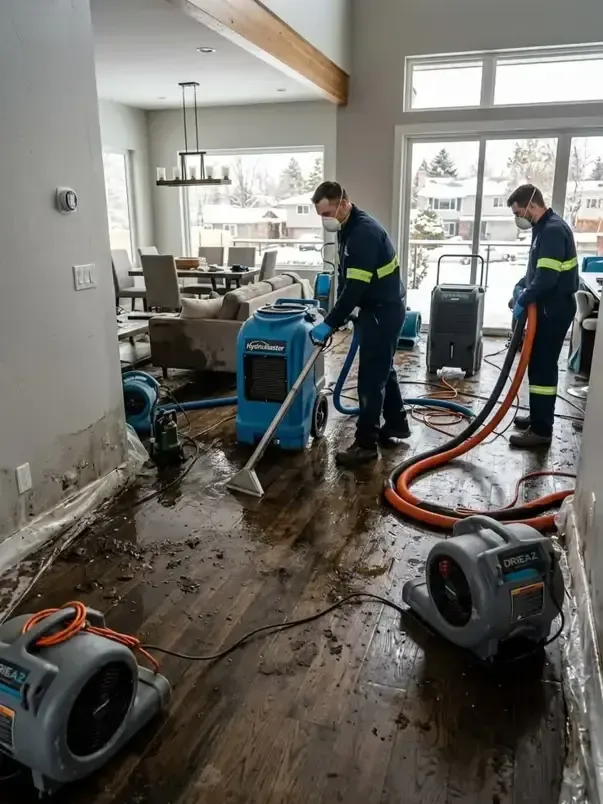
The mitigation crew establishes a moisture baseline, selects equipment for the affected assemblies and checks progress against dry reference materials. Recorded readings guide adjustments and the final equipment removal.
- 1
Assess water and access conditions
Access hazards are assessed first. Water condition determines safe recovery methods for liquid and debris inside the property.
- 2
Remove water and unsuitable materials
Recovery and removal follow the contaminated footprint. Porous items and building layers are assessed individually, with documentation of the materials that cannot remain in the restoration area.
- 3
Clean the exposed retained surfaces
Debris and residue need attention before the drying setup is finalized. Work routes and containment measures help keep the affected room separate from clean occupied spaces.
- 4
Dry and record the remaining structure
Moisture tracking follows retained walls, framing and floor assemblies. The final record connects these materials with the measurements needed before reconstruction decisions are made.
Follow the actual route into the building
Burbank has a downtown and foothill section and a flatland section, with the Verdugo Mountains forming its northern border. At an affected property, describe the doorway, opening or other point where water entered. The condition inside the room determines cleanup decisions and the route needed for safe access.
Magnolia Park shops and businesses along San Fernando Boulevard may have contents near floor level that need early documentation. A property in the Rancho Equestrian District may have different entrances or storage arrangements. Record the affected surfaces before moving items through clean portions of the building.
- Avoid entering moving water or rooms with uncertain electrical conditions.
- Keep children and animals away from water and deposited indoor debris.
- Photograph water marks and damaged contents before safe removal changes the scene.
Cleaning comes before the drying setup
Outdoor intrusion can contaminate porous flooring and other absorbent materials. The assessment identifies what needs removal and which exposed surfaces can be cleaned. Air movement should be planned after those decisions, with attention to separating affected spaces from occupied areas and preventing dirty material from spreading.
Retained framing and floor assemblies then need structural drying. Surface cleanup alone leaves uncertainty about moisture in enclosed edges and adjoining walls.
Insurance documentation for storm entry
Photograph the entry point, indoor water marks and affected belongings from a safe position. Keep removal notes and cleaning charges distinct from later repairs. Coverage decisions depend on the policy and loss circumstances, so the cleanup record should describe the observed water path and work without promising a claim outcome.
The cleanup cost calculator can support early budgeting questions before the contaminated footprint and removal needs are inspected.
Storm flood cleanup across Burbank and nearby towns
Stormwater assessments consider properties in the downtown and foothill section and the flatland section. Describe the entry opening, water condition and affected rooms so cleanup access can be planned around the actual intrusion.
The same service nearby: storm flood cleanup in La Crescenta, Glendale, La Canada Flintridge.
Related water damage services in Burbank

Storm Flood Cleanup questions in Burbank, CA
01Is outdoor floodwater treated like clean pipe water?
Outdoor water can carry contamination and debris. That changes access, material handling and cleaning decisions even when the water appears relatively clear inside the room.
02Can fans be used immediately after storm entry?
Air movement should follow assessment of contamination and loose material. Unplanned fans can distribute dirty droplets or particles into rooms that were not initially affected.
03Should wet cardboard boxes be unpacked indoors?
Affected absorbent packaging needs controlled handling. Photograph the items first when safe, then discuss a suitable sorting area that does not spread dirty material through the property.
04Does every affected carpet need the same treatment?
The water source, contamination and material condition determine handling. Outdoor intrusion often changes salvage decisions, so the carpet and its underlay require direct assessment.
05What proves which rooms the water reached?
Initial photographs, water marks and a room list help establish the footprint. Moisture readings can identify affected materials beyond the visible sediment or standing water.
06Will a standard policy cover outdoor flooding?
The insurer determines coverage from the policy and circumstances. Keep accurate source observations and cleanup records, and request a specific explanation of applicable coverage.
Plan the room cleanup after storm entry
Water removal is followed by decisions about cleaning and porous materials. Arrange an assessment that follows the entry route through contents, floors and adjoining wall surfaces.
La Crescenta Water Damage Restoration · La Crescenta, CA