Roof Leak Water Damage in Pasadena
Rain entering the roof can leave a winding trail through the attic before showing indoors. Interior cleanup follows that trail, while exterior repairs address the opening that allowed the weather into the building.
(888) 578-6508Discuss rain damage inside the roof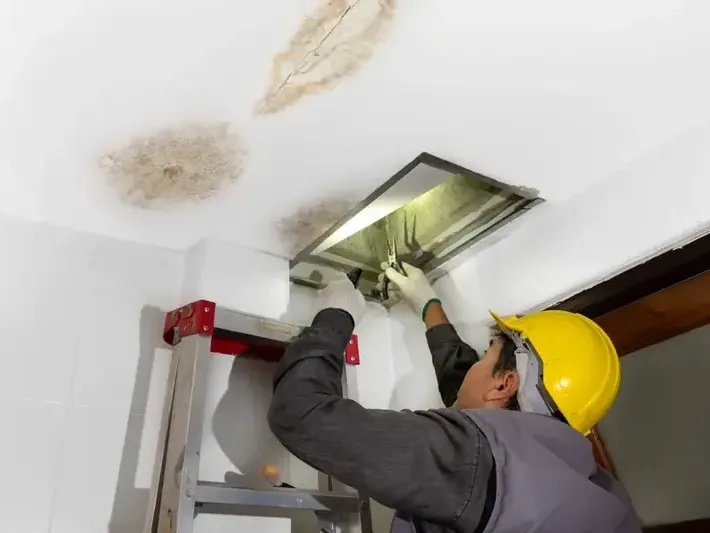
A roof leak in Pasadena needs indoor and exterior tasks connected from the start. Roof work limits renewed entry, while the interior assessment determines what the rain has already reached. Framing, insulation and ceiling layers may retain water after the weather clears, making a quiet drip an incomplete measure of the remaining damage.
First steps for roof leak water damage in Pasadena
Avoid unsafe exterior access
Wet coverings create hazards that cannot be assessed from indoors. The owner should describe visible conditions to the exterior contractor without climbing onto the roof.
Identify rooms beneath the entry
Stains, drips and wet furnishings help establish where the interior inspection should start. Notes should include changes after rainfall and whether any ceiling sections appear loose or bowed.
Keep roof work documented
Temporary protection and permanent repair findings should remain in the loss file. Interior cleanup planning needs to know whether water can continue entering the attic during another period of rain.
Plan access to retained moisture
The inspection should account for attic footing, insulation and electrical components. Proposed openings need to explain which wet materials cannot be reached or checked from the existing access point.
How roof leak water damage is handled in Pasadena
The mitigation crew establishes a moisture baseline, selects equipment for the affected assemblies and checks progress against dry reference materials. Recorded readings guide adjustments and the final equipment removal.
- 1
Connect exterior findings with stains
Roof information and interior observations establish the water route. Inspection tracks wet framing and ceiling areas instead of assuming the visible stain marks the only opening.
- 2
Make the attic work accessible
Saturated material is assessed before removal. Openings and insulation handling should provide useful access while preserving unaffected details and a stable route for the cleanup work.
- 3
Dry the exposed interior layers
Dehumidification and directed airflow support moisture release. Repeat readings identify sections needing further access, adjusted equipment or another check for continuing entry from the roof.
- 4
Separate cleanup from finish repair
Closing documentation describes interior conditions and outstanding construction. Roofing, insulation replacement and ceiling restoration need clear responsibility before the project moves into rebuilding.
Read the attic route before repairing the stain
The November 30 and December 1, 2011 windstorm damaged local buildings and tore the roof off a gas station. Wind can change the condition of roof coverings and openings, so current damage needs direct assessment. Occupants should stay off wet roofs and leave exterior access decisions to the appropriate contractor.
The San Rafael Hills contain the Hillside Campus of Art Center College of Design. For an affected property in this setting, the useful cleanup details are practical: the attic entrance, the rooms showing stains and any unsafe ceiling movement. Framing paths deserve inspection even when the visible water appears in a different room.
- Do not enter an attic with uncertain footing or wet electrical components.
- Keep photographs of rain entry and temporary exterior protection with repair notes.
- Identify soaked insulation that hides framing or prevents effective drying access.
Respect existing details while reaching wet material
Bungalow Heaven is known for small Craftsman homes. Retained interior woodwork or ceiling details should be documented before removal. Near Orange Grove Boulevard, historic residential settings create the same need for a careful repair record. Drying access still follows the actual wet assembly, with a clear explanation of why each opening is needed.
Where water has reached the room below, ceiling leak cleanup connects overhead access with the lower surfaces. Equipment should address moisture held in the cavity, not merely air circulating in an otherwise dry room.
Insurance paperwork for roof entry damage
Separate the exterior contractor's findings from the interior cleanup estimate. Photographs of affected insulation, framing and ceiling layers explain the removal and drying decisions. A dated record of observed entry and subsequent source work helps the insurer evaluate the loss under the property's policy.
Roof leak water damage across Pasadena and nearby towns
Roof related interior damage near the San Rafael Hills, Bungalow Heaven or Orange Grove Boulevard can be assessed around attic access, occupied rooms and the status of exterior repairs following the water entry.
The same service nearby: roof leak water damage in La Crescenta, South Pasadena, La Canada Flintridge.
Related water damage services in Pasadena

Roof Leak Water Damage questions in Pasadena, CA
01Does stopping the drip mean the attic is dry?
No. Insulation and framing can retain water after rainfall ends. Interior measurements and access checks determine what remains wet beneath the surface that first showed the leak.
02Is roof replacement part of interior cleanup?
Exterior roofing and interior water damage work are separate scopes. The contractors need to coordinate source control and access, but each estimate should state the tasks it includes.
03Can a homeowner inspect the roof during rain?
Wet coverings and unseen damage make roof access hazardous. A safe ground level description and indoor photographs are more useful than approaching an unstable or slippery exterior surface.
04Why might insulation require removal?
Soaked insulation may be damaged or block moisture release from surrounding framing. Its condition and the need to expose wet materials determine whether removal belongs in the cleanup.
05Will every stained ceiling need replacement?
The material condition, stability and concealed wet layers determine the answer. A stain alone does not select the repair method, and repainting should follow a suitable drying condition.
06Which photographs help explain the roof loss?
Keep images of the observed entry, temporary protection, affected attic materials and indoor damage. Together they connect exterior source work with the separate drying and reconstruction tasks.
Plan the attic and room recovery together
Wet insulation and ceiling layers can remain after the rain stops. Discuss their condition so source repair, interior access and measured drying can lead into a coordinated repair scope.
La Crescenta Water Damage Restoration · La Crescenta, CA