Ceiling Leak Water Damage in Pasadena
A stained ceiling calls for a look above the visible mark. Water can track along framing, collect in insulation and weaken panels before dripping reaches the furnishings or floor beneath the damaged area.
(888) 578-6508Discuss the wet overhead area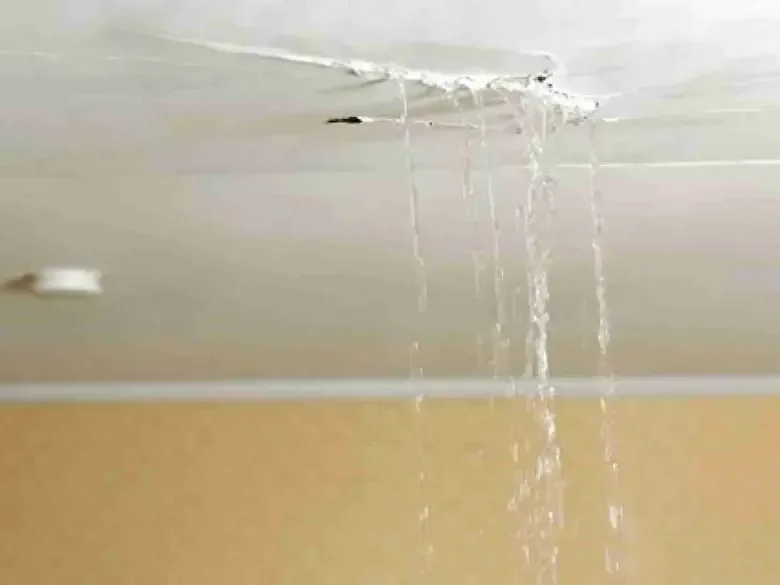
Ceiling leak damage in Pasadena often presents as a mark whose edges are easier to see than the water route above it. The inspection needs to connect that stain with the cavity, the source and the lower room. A bowed panel or opening seam also changes how safely the area can be entered.
First steps for ceiling leak water damage in Pasadena
Keep the fall area vacant
Occupants should avoid the space beneath a swollen ceiling. Furniture can wait when reaching it would place someone under material whose stability has not been assessed.
Describe the overhead symptoms
The first report should distinguish occasional staining from active dripping, sagging or an opening seam. Mention nearby light fittings and whether the room above contains plumbing or an accessible attic.
Record from a safe position
Wide photographs can connect the ceiling damage with the room below. Close images are useful only when they can be obtained without standing beneath a potentially unstable wet section.
Coordinate source and access work
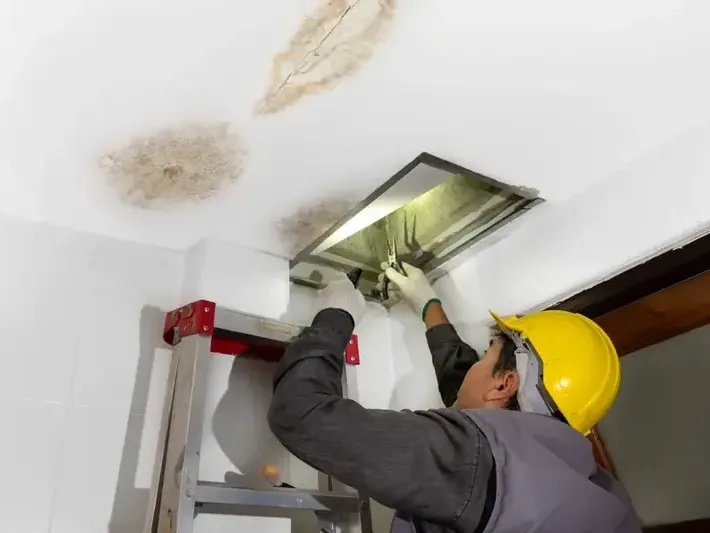
A ceiling opening should be planned with source findings and electrical safety in mind. The cleanup scope then identifies wet cavity contents and the finishes affected by necessary access.
How ceiling leak water damage is handled in Pasadena
The mitigation crew establishes a moisture baseline, selects equipment for the affected assemblies and checks progress against dry reference materials. Recorded readings guide adjustments and the final equipment removal.
- 1
Assess overhead stability
The inspection identifies loose finishes, electrical concerns and the likely water path. Occupant access remains limited until the affected ceiling area can be approached and opened safely for assessment.
- 2
Expose the wet cavity
Controlled access reveals the materials above the stain. The scope documents removed panels or insulation and the retained details that need protection during further cleanup and drying work.
- 3
Follow moisture through framing
Measurements extend beyond the visible mark to adjoining bays and lower surfaces. Equipment placement addresses the exposed construction, with changes made when readings indicate a section is drying differently.
- 4
Prepare a clear closing record
The drying record identifies assessed ceiling areas and remaining repairs. Replacement work should preserve required access until the cavity condition is suitable for planned closure.
Protect the room before opening overhead
Furniture directly below loose material should not draw occupants into a hazardous area. Electrical fixtures, soaked insulation and weakened ceiling sections require assessment before access work begins. Catching a drip may reduce a puddle temporarily, but it does not stabilize the ceiling or establish that the cavity is safe to open from below.
Bungalow Heaven contains Craftsman homes dating from 1900 to 1930. Where a ceiling includes retained decorative details, early photographs can preserve the appearance and condition before cleanup access changes it. The priority is a controlled opening that reaches wet material while accounting for what can safely remain.
- Describe sagging, cracking and sounds of movement during the first conversation.
- Avoid touching wet light fittings or entering a room beneath unstable finishes.
- Include the lower floor and furnishings when recording the visible damage boundary.
Connect drying with the eventual ceiling repair
Orange Grove Boulevard has historic residential associations, and the Pasadena Permit Center lists Design & Historic Preservation among its contacts. Alterations to designated properties may require a Certificate of Appropriateness. The repair scope should identify affected details early, while cleanup records explain which wet materials required access and what condition remained afterward.
When plumbing is the source, the burst pipe cleanup page describes the related supply loss. A ceiling beneath a roof opening needs a different source repair, even when the indoor drying equipment looks similar.
Ceiling leak documentation for insurance
Images should show the stain before opening, the exposed cavity and damage below. Source findings help distinguish plumbing, roof and other repair responsibilities. Moisture readings belong with the ceiling material notes so the insurer receives a coherent account of why access, removal and drying were proposed.
Ceiling leak water damage across Pasadena and nearby towns
Ceiling damage in Bungalow Heaven, near Orange Grove Boulevard or around the Civic Center needs a description of the room above, active dripping and visible panel movement before anyone approaches the affected overhead surface.
The same service nearby: ceiling leak water damage in La Crescenta, South Pasadena, La Canada Flintridge.
Related water damage services in Pasadena

Ceiling Leak Water Damage questions in Pasadena, CA
01Is a ceiling stain always directly under its source?
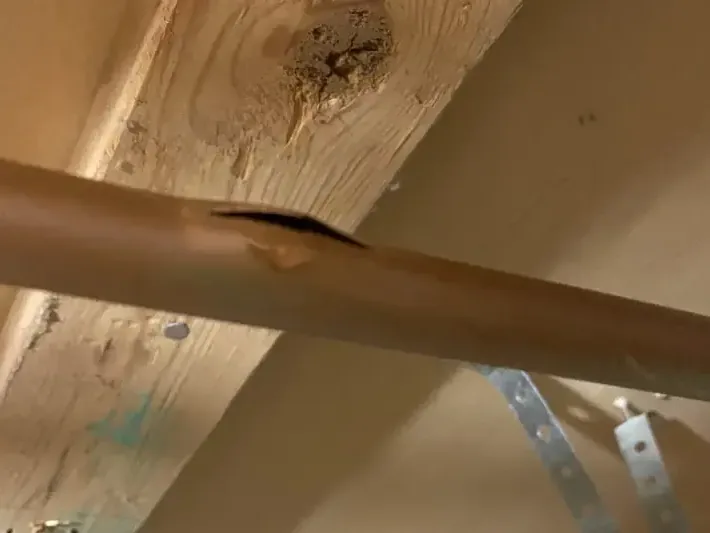
Water can run along framing before reaching a seam or low point. Inspection above the mark helps locate the entry route instead of assuming the stain pinpoints the failure.
02Can a bucket make the room safe?
A bucket may collect drips but cannot support weakened panels or protect wet electrical fixtures. Occupants should remain away from the affected overhead area until its condition is assessed.
03Should wet insulation stay inside the ceiling?
Its condition, contamination and accessibility determine the decision. Saturated insulation may obstruct cavity drying and need removal even when the outer ceiling surface shows only a small patch.
04Does a historic ceiling need special repair planning?
Retained details should be documented before access. Designated properties may have approval requirements for alterations, so proposed finish work needs coordination with the relevant preservation and permitting contacts.
05Why inspect the floor beneath a small drip?
Water can spread under furniture or flooring after landing. The lower room needs moisture checks where repeated dripping may have affected surfaces beyond the directly visible ceiling damage.
06When should painting take place?
Painting follows source correction and a suitable material condition. Covering the stain too early can conceal continuing moisture while leaving the underlying cavity and damaged ceiling materials untreated.
Account for the cavity before replacing the finish
A ceiling repair needs more than a covered mark. Connect the source findings with the wet overhead materials and damage below so the cleanup scope reaches each affected layer.
La Crescenta Water Damage Restoration · La Crescenta, CA