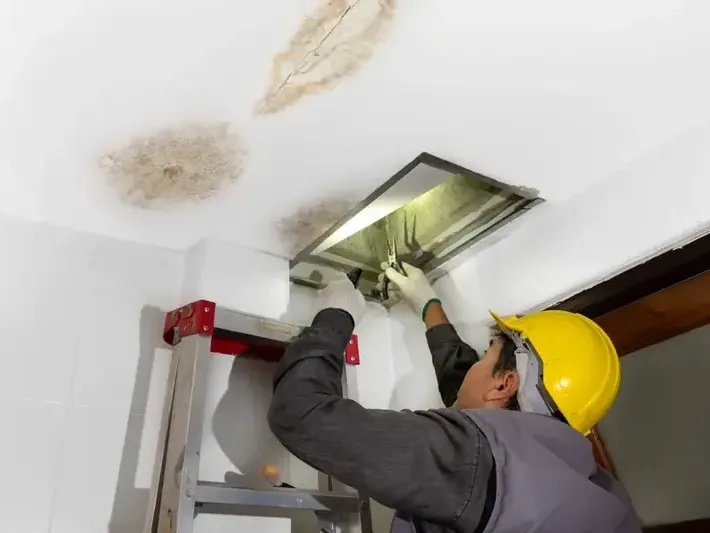
Pacific storms return to Pasadena by November, while rainfall tapers significantly by April. A ceiling stain noticed before the next wet period deserves a record that connects the roof inspection with the indoor condition. The useful details include when the mark appeared, whether it changed during rain and which accessible attic or ceiling materials are damp. Those observations let the roofing and restoration trades coordinate the opening above with the affected rooms below.
Key takeaways
- Rain timing helps organize the record when it is paired with observations at the building.
- Roof access and wet ceiling access require appropriate personnel and safe working conditions.
- Insulation, framing and ceiling finish should have separate condition notes when exposed.
- Temporary protection should be documented alongside the permanent roof repair that remains.
- Final interior readings and the roof repair scope should stay together in the owner's file.
Build a weather and room timeline
A homeowner can start with the first discovery of the stain and the next occasion when its appearance changed. A safe photograph that includes a fixed feature makes later comparison easier.
Notes should distinguish an active drip from an old discoloration, since the inspection needs to understand the current behavior of the room.
The local history includes a windstorm on November 30 and December 1, 2011 that damaged buildings and tore the roof off a gas station. A present roof loss still needs its own observations: the opening found, the exposed material and the interior route.
Those details are what connect a repair proposal to the home being assessed.
The roof leak damage service follows water into the affected interior assembly. A useful intake note names the room beneath the suspected entry and any change during subsequent rain.
This allows the crew to compare the occupant's account with the material condition instead of treating every ceiling mark as an identical event.
- Keep the first stain image and later comparison images labeled by discovery time.
- Describe active dripping separately from marks that have stayed visually unchanged.
- Include a fixed room feature in photographs so the same location can be found.
- Note temporary roof work already performed and whether another interior change followed it.
Inspect the attic without creating another hazard
A damp attic is a work area with limited footing, concealed edges and possible electrical exposure. Occupants should avoid entering an unsafe space or walking on ceiling material.
The appropriate inspector can determine where access is possible and document the conditions that limit inspection before any attempt to reach the suspected wet area.
The attic record should describe the route found rather than simply state that the roof leaked. Accessible sheathing, framing and insulation may show different patterns of contact.
Naming those components and their locations helps the roofing contractor compare exterior findings with the path visible from inside the building.
Photographs need enough surrounding detail to remain useful after the work changes the space. A close view of a wet component belongs alongside an image showing its position relative to the attic access or another fixed feature.
This connection is especially valuable when the person performing the roof repair did not attend the interior assessment.
Separate overhead materials in the work scope
Insulation, framing and ceiling finish can require different decisions after water contact. Their condition, accessibility and ability to be cleaned or dried need individual assessment.
A single instruction to dry the attic gives the owner little explanation of which layer will remain, which may be removed and what will be checked on a return visit.
If ceiling material sags or water approaches a light fitting, access to the room below should be restricted. The ceiling damage evaluation addresses the overhead condition before routine work proceeds underneath it.
Contents movement should follow that access decision, rather than placing an occupant beneath weakened material to collect belongings.
Any controlled opening should be documented before and after work. The new view may reveal moisture outside the initially visible stain, and that finding belongs in the updated scope.
The owner should receive a simple explanation of why the opening was needed and how the exposed area will support inspection, drying or later repair.
- Name each affected overhead material instead of grouping the entire cavity together.
- Photograph the original ceiling condition before an authorized opening changes its appearance.
- Record wet material found outside the visible stain as an additional inspection finding.
- Keep the room below restricted whenever overhead or electrical conditions make access unsafe.
Roof protection and interior progress
Temporary protection and permanent correction should have distinct descriptions. The owner needs to know what action currently limits entry and which roof work remains to be completed.
This helps the indoor crew interpret new observations during another rain event and prevents an interim measure from disappearing into a vague statement that the source was fixed.
The roofing contractor's findings should be connected to the relevant interior room. An exterior opening may sit away from the point where water becomes visible inside.
Photographs and a location sketch allow both trades to compare the route, with the repair description identifying the actual condition addressed on the roof.
If fresh water appears while indoor work is underway, that change should be reported with its location and discovery time. The crew can then distinguish renewed entry from moisture already held in the assembly.
That distinction supports practical equipment and access decisions, while the roof contact evaluates whether further protection or correction is needed.
Use repeat observations below and above the ceiling
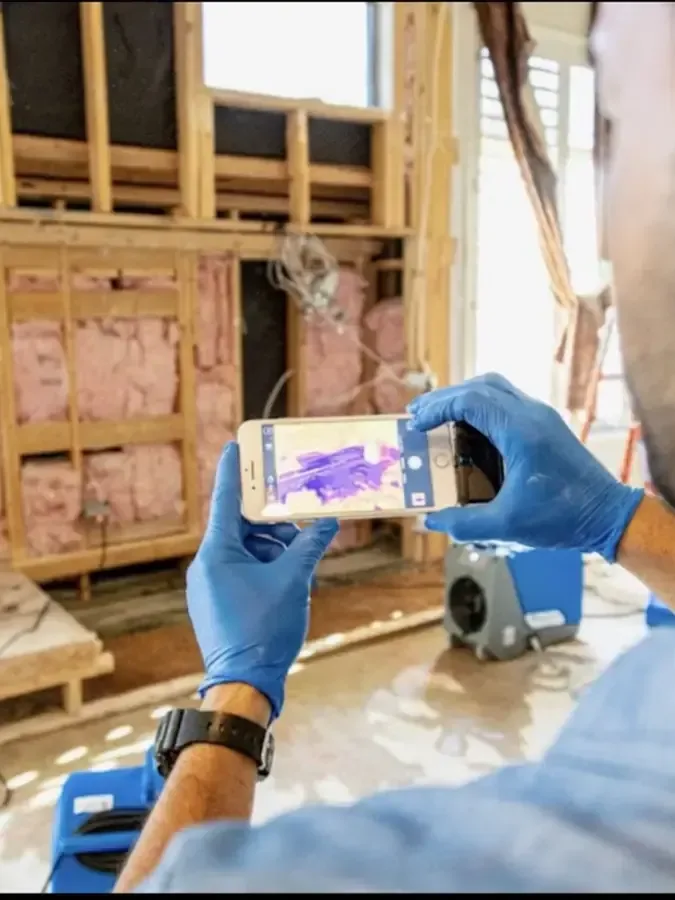
Suitable retained materials need an organized drying record. The structural drying service connects material measurements with the surrounding air conditions and the available access.
Each tracked location should be identifiable on the room or attic diagram, allowing another visit to assess the same part of the assembly.
A room that feels comfortable can still have an affected overhead layer. The progress discussion should therefore name the component being measured and describe how it is responding.
Equipment changes or additional access should be explained through the material that needs attention, keeping the owner informed about the specific reason work continues.
Ceiling finish repair should follow the findings from the layers that will be covered. The repair contractor benefits from knowing where wet insulation was removed, where framing was retained and what readings support closing the area.
This record links the visible cosmetic work with the less visible condition inside the assembly.
- Maintain location labels for attic framing and the corresponding interior ceiling area.
- Record equipment changes together with the observation that prompted the adjustment.
- Keep new rain entry notes separate from the measurements of previously wet material.
- Provide the closing contractor with the condition of layers that will become concealed.
Make the next rain easier to interpret
The final file should preserve a clear comparison point for the repaired room. Photographs after drying and after finish repair show what the ceiling looked like at each handoff.
A later mark can then be described against that record, instead of leaving the owner unsure whether a stain was present before the roof work.
Source correction documents belong with the interior findings. The roof repair scope, temporary protection notes, removal photographs and final material readings together describe how the event was handled.
Any unfinished task should be named by location and trade so the owner can coordinate the next visit without reopening the entire discussion.
Follow up observations can remain simple. From a safe indoor position, the owner can note whether the repaired area changes during later rain and preserve a comparable photograph if it does.
Roof inspection and access should remain with the appropriate personnel; the household record only needs to describe what became visible inside.
Questions
Does an old ceiling stain mean the roof is still leaking?
The current condition needs inspection. A history of when the stain appeared, whether it has changed and any recent dripping helps the assessor distinguish the observed mark from active moisture.
Should insulation be left in place during assessment?
The decision depends on its condition and the access needed to inspect the assembly. The work scope should identify which material is retained or removed and explain the reason at that location.
Why keep the temporary protection paperwork?
It records what was done to limit entry while permanent correction was pending. That information helps interpret later water observations and coordinate the remaining roof work.
When can the ceiling opening be closed?
The relevant source work, retained material condition and drying findings need to support the handoff. The repair contractor should receive those details before the assembly becomes concealed again.