Hardwood Floor Water Damage in Pasadena
Raised board edges can be the visible part of a deeper moisture problem. A useful floor assessment connects the wood surface with its backing, substrate and nearby wall edges before sanding or replacement is considered.
(888) 578-6508Discuss changes in the wet wood floor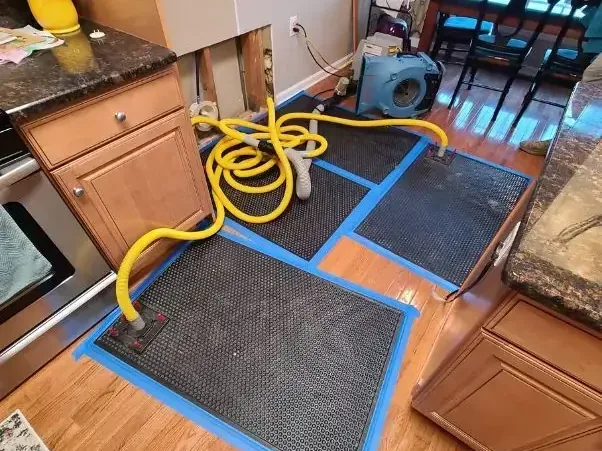
Hardwood floor damage in Pasadena needs an assessment of the entire floor assembly. Water can collect beneath boards while the exposed finish begins to look normal. Raised edges, gaps or discoloration deserve documentation, but the repair decision also depends on moisture in the substrate and whether drying can reach the layers holding water underneath.
First steps for hardwood floor water damage in Pasadena
Describe changes across the boards
Identify raised edges, loose sections and water in adjoining rooms. Notes about the source and earlier removal help establish where the floor assessment needs to begin.
Protect the affected walking area
Occupants should avoid unstable boards and electrical hazards. Heavy furniture movement can damage weakened flooring, so access and contents handling need assessment before large pieces move.
Preserve details before selective lifting
Photographs can record transitions, board appearance and retained trim. If drying requires removal, the exposed layers should also be documented so later repair decisions have a clear record of the construction encountered.
Coordinate drying with the installer
Sanding and replacement need a suitable underlying material condition. The flooring trade should receive moisture observations and any access findings before deciding how to restore the finished surface across the affected room.
How hardwood floor water damage is handled in Pasadena
The mitigation crew establishes a moisture baseline, selects equipment for the affected assemblies and checks progress against dry reference materials. Recorded readings guide adjustments and the final equipment removal.
- 1
Map board and substrate conditions
Assessment records visible movement and moisture at floor interfaces. Adjoining partitions and transitions are checked so the damaged board pattern does not limit the inspection area.
- 2
Decide where access is needed
Construction and material condition determine whether existing access supports drying. Selective lifting should preserve records of finishes and supporting layers while providing a useful treatment path.
- 3
Monitor the floor response
The setup addresses retained moisture while readings show the assembly response. The technician compares readings in the boards and supporting layers because their drying rates can differ.
- 4
Prepare the flooring repair decision
The record identifies treated areas and remaining damage. The installer considers substrate condition, product requirements and board response before choosing replacement, refinishing or another repair sequence.
Record the existing floor before changing it
Bungalow Heaven contains small Craftsman homes built from 1900 to 1930. The Gamble House is an example of American Craftsman architecture in the city. At an affected home with retained wood finishes, photographs should capture board dimensions, transitions and existing details before selective lifting or removal changes the room's appearance.
Orange Grove Boulevard is a residential district associated with historic mansions. Where flooring connects through a larger interior, the inspection should check beyond the visibly changed boards. Thresholds, cabinet edges and adjoining wall bases can hold moisture that matters to the repair scope even if the central floor area looks less affected.
- Avoid sanding raised board edges before moisture conditions have been assessed.
- Keep heavy loads away from loose or unstable flooring pending inspection.
- Record the condition beneath any boards lifted for necessary drying access.
Match the drying method to reachable materials
Some floors permit useful drying access while others conceal wet layers beneath adhesive, backing or fixed cabinetry. The proposed treatment should explain how it reaches the moisture and how progress will be checked. Retention is a material decision, not a promise that every board will return to its previous appearance after equipment runs.
When a buried release is involved, the slab leak assessment connects source repair with the floor damage. Plumbing access and flooring restoration need coordination so the repair opening does not become the only area checked for remaining moisture.
Floor damage records for insurance and replacement
Keep source findings, room photographs and substrate measurements together. The estimate should distinguish drying from board removal, replacement and refinishing. A flooring contractor needs the final material condition and product requirements before deciding when installation or surface work can proceed over the treated assembly.
Hardwood floor water damage across Pasadena and nearby towns
Floor damage in Bungalow Heaven and near Orange Grove Boulevard or the Gamble House can be discussed with details about board movement, the source of water and access to surrounding rooms with connected flooring.
The same service nearby: hardwood floor water damage in La Crescenta, South Pasadena, La Canada Flintridge.
Related water damage services in Pasadena
Hardwood Floor Water Damage questions in Pasadena, CA
01Can raised wood edges be sanded immediately?
Sanding should wait for an assessment of moisture and material response. Altering wet boards prematurely can complicate later restoration when their shape changes as the floor assembly dries.
02Will drying save every damaged board?
Retention depends on the wood, damage and access to wet supporting layers. Some boards may remain suitable, while others require replacement even after the moisture problem has been addressed.
03Why measure beneath an apparently dry finish?
The exposed surface can dry before the substrate. Moisture trapped below boards affects repair readiness and may require access that ordinary surface drying or visual inspection cannot provide.
04Should heavy furniture move off the wet section?
Movement needs assessment of footing, board stability and handling access. Dragging a heavy item across weakened flooring can add damage, so a safe plan should precede relocation.
05Does the original floor appearance need documenting?
Photographs of transitions, board details and trim support repair planning before removal. The record is particularly useful where retained finishes require careful matching or selective replacement after cleanup.
06Who determines when a new floor can be installed?
The flooring contractor evaluates the substrate and product requirements. Drying observations inform that decision, while installation should follow the actual material condition rather than a predetermined calendar date.
Plan the repair from beneath the finish
Wood flooring needs attention to hidden moisture as well as appearance. Arrange an assessment that connects the damaged boards with drying access and the requirements of later flooring work.
La Crescenta Water Damage Restoration · La Crescenta, CA